Cypress Hill: South Gate's Stoned, Bilingual Blueprint for West Coast Rap
Cypress Hill sounded like nothing else on 1991 radio. A nasal, high-pitched lead voice, a gruff counterpart shouting alongside it, and beats full of slow, hazy sample loops added up to a group that was somehow menacing and funny at once. They formed in South Gate, California, in 1988, and took their name from a local street.
The core was B-Real and Sen Dog on the microphone, with DJ Muggs behind the boards. Sen Dog and his brother Mellow Man Ace were born in Pinar del Río, Cuba, before their family moved to the United States in 1971. Percussionist Eric Bobo became an official member in 1994. Together they became one of the first Latin American groups to gain mainstream recognition in hip-hop, and they went on to sell more than 20 million albums worldwide.
Their other calling card is cannabis, which they advocated for openly, and which made them cultural lightning rods in the early 1990s. But reducing them to a novelty undersells their influence. The self-titled debut and Black Sunday are among the defining West Coast records of their decade, and the group's willingness to cross over into rock opened doors that stayed open for years.
B-Real's Nasal Bite, Sen Dog's Roar and DJ Muggs's Smoky Sample Loops
The vocal contrast is the first hook. B-Real described his high, nasal rapping voice as something that developed naturally, and as a way to stand out. Sen Dog's voice is deeper and more forceful, often shouted, with a second voice stacked behind his lines for emphasis. B-Real said the two voices blend, and on record that blend works like a good-cop, bad-cop routine.
DJ Muggs supplied the atmosphere. His production leans on bass-heavy rhythms, spooky sounds and odd sample loops, with a stoned, psychedelic pull. In "Insane in the Brain" a pitched blues guitar loop sits right in the chorus.
Lyrically the group mixes English and Spanish, a trait that starts with "Latin Lingo" from the debut and runs through their catalog. Critics have also noted a cartoonish approach to violence in their writing, a tone that kept the first two albums from feeling like straightforward gangsta rap even when the subject matter was dark. Later work like Skull & Bones separated its rap and rock sides across two discs, while the Muggs-led Elephants on Acid in 2018 returned to a more psychedelic hip-hop approach.
From Cypress Hill to Black Sunday to Dios Bendiga: A Career Across Genres
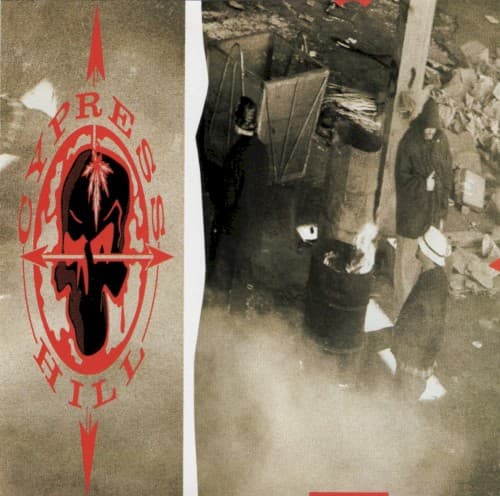
After a 1989 demo, Cypress Hill signed with Ruffhouse Records. Their self-titled debut arrived in August 1991 and went double platinum. The double A-side "The Phuncky Feel One" and "How I Could Just Kill a Man" topped Billboard's Hot Rap Tracks chart, and "Hand on the Pump" and "Latin Lingo" followed. Our review of the debut treats it as a landmark of the early-90s West Coast sound, with a tone and a sample palette that still feel distinct.
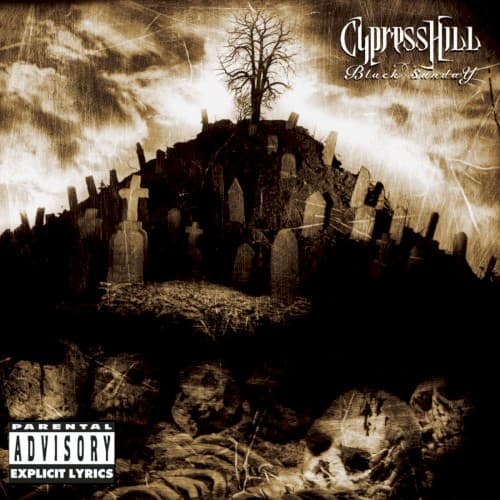
Black Sunday in 1993 went further. It debuted at number one on the Billboard 200, recording the highest Soundscan opening for a rap group to that point, and "Insane in the Brain" crossed over to number 19 on the Hot 100 and earned a first Grammy nomination. They had toured with the Beastie Boys behind the debut, and in October 1993 they appeared on Saturday Night Live, where DJ Muggs lit a joint on air and the group was banned from the show. They also contributed "Real Thing" with Pearl Jam and "I Love You Mary Jane" with Sonic Youth to the Judgment Night soundtrack, an early rap-rock experiment.
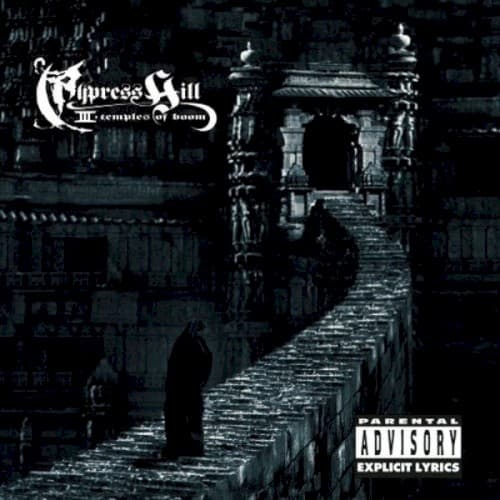
III: Temples of Boom reached number three in 1995, but Sen Dog left the group abruptly during the touring cycle before rejoining in 1998 for IV and its single "Dr. Greenthumb". Then came the boldest swerve: Skull & Bones in 2000, a two-disc set splitting rap and rock, which hit number five and went platinum. The rock-leaning Stoned Raiders followed in 2001 and sold less than expected, peaking at number 64.
The 2000s and 2010s were looser. Till Death Do Us Part (2004) brought reggae flavors and guests such as Damian Marley and Prodigy of Mobb Deep. Rise Up (2010), on Priority Records after Snoop Dogg became its creative chairman, leaned on outside producers and guests including Tom Morello and Pitbull, with DJ Muggs appearing on only two tracks. In 2007 they headlined the Rock the Bells tour alongside Public Enemy, Wu-Tang Clan and Nas. They received a star on the Hollywood Walk of Fame in 2019, the first collective hip-hop group to get one.
Recent years brought Back in Black (2022), produced by Black Milk, their lowest-charting album, and a July 2024 performance with the London Symphony Orchestra at the Royal Albert Hall. For 2026 they announced Dios Bendiga, an all-Spanish album led by DJ Flict.
Cypress Hill's Legacy: Latin Voices, Rap-Rock Bridges and Stoner Culture
Cypress Hill are often credited as one of the few Hispanic American hip-hop groups to break through with their own stylistic stamp, and they did it by being unmistakably themselves. The bilingual hooks, the bark-and-nasal vocal pairing and the smoky Muggs beats all became easy to recognize and hard to imitate.
Their influence also runs beyond hip-hop. The group has been cited as a strong influence on nu metal bands including Deftones, Limp Bizkit, System of a Down and Korn, and Korn's 1994 single "Blind" ends with a bassline that pays direct tribute to "Lick a Shot". On the rap side, Eminem and Post Malone have named them as an influence.
There are real limits to the story. After Skull & Bones, their rock experiments divided listeners, and recent albums have not matched the commercial heights of the 1990s. But the best of the catalog, and their nearly four decades of touring, reward anyone who wants to understand how West Coast hip-hop made room for weirdness.