From Tity Boi to Trap Royalty: 2 Chainz's Journey Through Atlanta's Hip-Hop Landscape
Tauheed Epps rechristened himself twice before the world knew him as 2 Chainz — a transformation that mirrors the career arc of one of Atlanta's most durable mainstream rappers. Before the solo breakthrough, before the pink trap houses and luxury brand partnerships, he spent a decade as Tity Boi in the duo Playaz Circle alongside fellow College Park native Dolla Boy. Their 2007 debut "Supply & Demand" introduced a regional sound that never quite ignited nationally, but the groundwork mattered. When Epps reemerged as 2 Chainz in 2011, he wasn't inventing a persona from scratch — he was shedding one that had hit its ceiling.
What distinguishes 2 Chainz in trap's crowded marketplace is his comedic timing married to street credibility. He operates in the space where absurdist punchlines coexist with genuine hustler narratives, where a line about eating Benihana on a Wednesday can land harder than expected because the delivery never winks at the camera. His voice — that gravelly, slightly nasal drawl — became one of the era's most recognizable instruments, capable of turning guest verses into career-defining moments before his solo career even gained altitude.
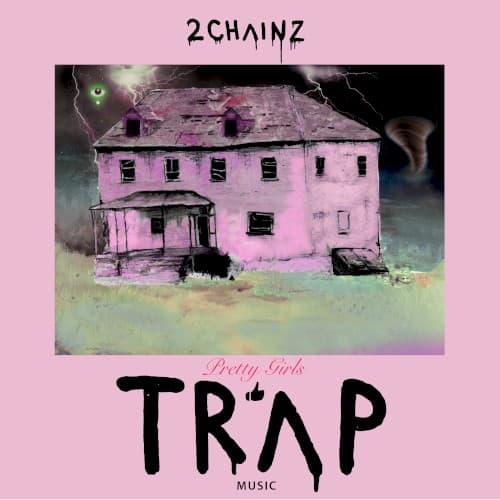
Atlanta produced him, but 2 Chainz's commercial instincts set him apart from many regional peers. By the time "Pretty Girls Like Trap Music" arrived in 2017, he had already established himself as both a chart presence and a cultural reference point, someone who could oscillate between strip club anthems and introspective family records without losing his core audience. That ability to code-switch within the trap framework without diluting it remains his signature achievement.
Luxury Trap Aesthetics: 2 Chainz's Sonic Identity and Signature Flow
The 2 Chainz approach centers on maximalist trap production paired with minimalist lyrical technique. He doesn't overcomplicate the formula: snare-heavy beats, synth melodies that shimmer between menacing and celebratory, 808 patterns that prioritize pocket over complexity. Production relationships with Mike Will Made-It, Drumma Boy, and Sonny Digital helped define his early solo sound — crisp, expensive-sounding trap that felt designed for both headphones and arenas. The sonic palette rarely ventures into experimental territory, but consistency became its own virtue.
His flow operates on delayed gratification. The Chainz delivery style builds tension through rhythmic restraint, often landing syllables just behind the beat in a way that creates casual swagger. Punchlines arrive without telegraphing — he'll bury the best joke in the middle of a bar rather than saving it for the climax. This structural choice makes his verses rewarding on repeat listens, where lines that seemed throwaway reveal themselves as miniature narrative arcs or conceptual flexes.
Vocally, he works within a narrow dynamic range but exploits it completely. The raspy texture, the tendency to let certain syllables decay into near-mumbles, the occasional ad-lib that undercuts his own braggadocio — these tics became instantly identifiable. Unlike peers who chase vocal versatility, 2 Chainz committed to perfecting a single instrument. The production might shift from minimalist Metro Boomin coldness to lush soul samples, but his voice remains the constant, adapting through cadence rather than timbre. On "Pretty Girls Like Trap Music", that approach reached its apex: trap fundamentals executed with such confidence that innovation became secondary to mastery.
Playaz Circle to Chart Dominance: Mapping 2 Chainz's Commercial and Creative Trajectory
The Playaz Circle years represent the most underexamined chapter of the 2 Chainz story. Signed to Ludacris's Disturbing tha Peace imprint, they released "Supply & Demand" into a market already saturated with Southern rap success stories. "Duffle Bag Boy" featuring Lil Wayne cracked the Top 20, proving regional viability, but the album's commercial performance couldn't sustain momentum. A second album, "Flight 360: The Takeoff", arrived in 2009 to even less fanfare. These weren't failures — they were education. Epps learned how the industry worked, absorbed what separated regional hits from national movements, and recognized when a brand had exhausted its potential.
The 2011 mixtape "T.R.U. REALigion" announced his reinvention. Under the new moniker, he flooded the market with verses — appearing on Nicki Minaj's "Beez in the Trap", Kanye West's "Mercy", and accumulating guest spots that turned him into rap's most valuable bench player. That strategy — ubiquity before album releases — proved crucial. By the time "Based on a T.R.U. Story" dropped in 2012, the audience already knew him. The debut peaked at number one on the Billboard 200, powered by "No Lie" featuring Drake and the Kanye-assisted "Birthday Song". This wasn't an overnight success; it was a decade of preparation meeting calculated moment.
"B.O.A.T.S. II: Me Time" followed in 2013, refining the formula with Pharrell, Drake, and Fergie collaborations that expanded his pop crossover without sacrificing street credentials. But "Pretty Girls Like Trap Music" in 2017 marked his creative peak — an album that balanced commercial trap expectations with surprising depth. Tracks like "4 AM" featuring Travis Scott delivered the expected club energy, while "It's a Vibe" with Ty Dolla $ign showcased his ear for melodic trap. The album's title itself became cultural shorthand, a meme that transcended the music while still selling the product.
Subsequent releases — "Rap or Go to the League" (2019), "So Help Me God!" (2020) — demonstrated consistent work ethic if diminishing commercial returns. The industry shifted toward younger voices and different trap iterations, but 2 Chainz never chased trends desperately. His Def Jam releases maintained quality standards even as streaming numbers told a story of gradual audience contraction. He pivoted toward entrepreneurship, launching the CEO Millionaires brand and expanding into television with "Most Expensivest", a Vice series that leveraged his luxury-obsessed persona into media content. The moves suggested someone reading the market clearly: veteran rappers sustain careers through diversification, not chart competition with artists half their age.
Cultural Imprint and Influence: 2 Chainz's Role in Trap's Mainstream Expansion
Measuring 2 Chainz's influence requires looking past album sales toward his impact on trap's linguistic and aesthetic codes. The phrase "truuuu" became internet vernacular. His fashion choices — particularly the embrace of high-end designers paired with trap aesthetics — helped normalize luxury branding within a genre that had always celebrated wealth but often through different visual languages. When he arrived at the BET Awards in a car wrapped entirely in holographic foil, it wasn't just spectacle — it was articulating trap's maximalist philosophy through physical form.
His guest verse economy changed how artists approached features. In an era when rappers often phoned in obligatory sixteen bars, 2 Chainz treated every appearance as audition and advertisement. His verse on Kanye's "Mercy" became the quotable centerpiece. On Big Sean's "Mercy", he outshone the track's primary artist. This consistency made him invaluable to producers and A&Rs assembling albums — a 2 Chainz feature guaranteed a certain energy level, a specific type of charismatic excess that elevated surrounding material. Younger artists like Travis Scott and Young Thug absorbed that lesson about features as career infrastructure.
The "Pretty Girls Like Trap Music" title represents his clearest cultural contribution: the recognition that trap had escaped its regional and demographic origins to become pop music's dominant grammar. By naming that phenomenon explicitly, 2 Chainz helped legitimize trap's crossover without demanding it compromise. The album proved you could make uncompromised trap records that still appealed beyond traditional audiences — not through dilution but through confidence in the form itself. That philosophical stance influenced how labels marketed trap artists throughout the late 2010s, moving from niche positioning to mainstream inevitability.