The scorecard
4.8/10 · Weak
- Writing25%
- 5.5
- Production25%
- 4.5
- Delivery15%
- 6.5
- Cohesion15%
- 3.0
- Originality10%
- 4.0
- Replay value10%
- 4.5
The wordplay is still sharp on scattered verses but most tracks settle for familiar boasts and the skits kill momentum every few songs.
Easy Mo Bee delivers on the two "Uncut, Pure" versions but Kane's self-production across thirteen tracks sounds thin and dated even for 1998.
Kane's flow remains fluid and his voice commands attention when he commits, though the hooks are weak and the guests add little.
Twenty-one tracks with seven skits scattered throughout create a bloated, disjointed listen that plays like demo fragments instead of an album.
Ten years removed from his debut Kane offers no new ideas, just echoes of the Golden Age sound filtered through late-90s trends he does not understand.
"Uncut, Pure" holds up but the rest fades on first listen and the length ensures you will not try again.
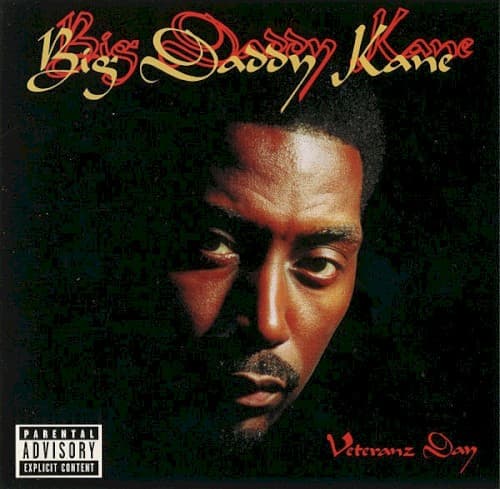
Big Daddy Kane Veteranz Day — The Hunger That Left Queensbridge
Veteranz Day is what happens when a legend returns with nothing left to prove and no clear reason to be back. Four years after Daddy's Home disappeared without consequence, Big Daddy Kane spent 1998 reminding anyone still listening that he could still rap circles around the competition, then buried that skill under seventy-three minutes of filler, skits and self-produced beats that sound like he learned Pro Tools over a weekend. The thesis arrives early: Kane can still write and flow when he wants to, but he does not want to often enough, and when he does the production cannot carry the ambition. "Uncut, Pure" made the top ten on the rap chart because Easy Mo Bee gave him a canvas worth rapping on; everything else on the album explains why the Label Records folded shortly after release and why this became Kane's first project to miss the Billboard 200 entirely.
The context matters only to understand the stakes, which were low. By 1998 Kane had been lapped by the very style he helped invent: the intricate rhyme schemes, the jazz-rap fusion, the performer's charisma. Veteranz Day arrives in the year of DMX's two number-one albums and it sounds like it was recorded in 1993 and shelved for good reason. Kane handles production on thirteen of the twenty-one tracks and the result is a masterclass in why great rappers do not always make great producers. The beats are not broken, just forgettable, and they flatten every attempt at substance into background music. When he hands the boards to Easy Mo Bee or DJ Ill the difference is immediate, but those moments are rare and they make the rest sound worse by comparison.
The Wordplay Without the Canvas
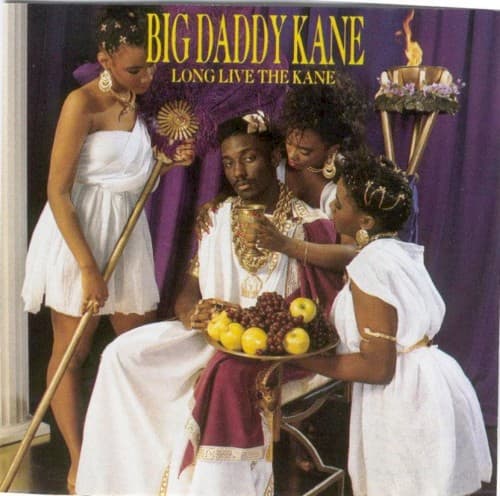
Kane's writing still works in flashes. On "Uncut, Pure" he stacks internal rhymes and pivots between tempos with the same ease he had on Long Live the Kane, and the Easy Mo Bee production gives him room to show off the mechanics. The beat has weight and space, and Kane fills both with the kind of technical precision that made his reputation. The remix, produced by Kane himself, keeps some of that energy by leaning on a "Breakdown" sample, but the mix is muddier and the verses feel like they are fighting the track instead of riding it. That gap defines the album: when someone else builds the foundation, Kane can still construct a verse worth hearing, but he cannot build the foundation himself.
The self-produced tracks expose the limits. "Terra N Ya Era," "Hold It Down," "Do U Really Know?," "Shame!," "Definitely," and "Unda Presha" all share the same problem: the beats are competent enough to not distract, but they never give Kane a reason to elevate. The drums are flat, the samples are obvious, and the arrangements sound like first drafts. Kane's flow adapts to the lack of dynamics by settling into a mid-tempo cruise control that works for a verse or two but cannot sustain a four-minute song. The hooks are the weakest part of the writing: repetitive, underwritten, and often handed off to guests who sound like they were pulled from the studio hallway. Kelly German on "Hold It Down" and Mike Ransom on "2 da Good Tymz" deliver functional R&B choruses that belong on a different album, and the pivot from Kane's dense verses to their melodic interludes kills whatever momentum the rapping built.
The writing itself still has the tricks. Kane's internal rhyme schemes on "Entaprizin'" and "Unda Presha" show the same attention to syllable stacking that made his early work studied by every technical rapper who came after, and his imagery is specific when he bothers: the Queensbridge references on "Terra N Ya Era," the competitive disses on "Change This Game Around," the self-aware commentary on "Shame!" that acknowledges how far he has fallen from the late-80s peak. But the ideas do not develop. Every song is a variation on the same thesis: Kane can still rap, the game has passed him by, and he is unbothered. By the tenth track the point is made and the repetition becomes padding. The album has no narrative arc, no thematic progression, just twenty-one entries in a tracklist that could be shuffled without loss.
Seventy-Three Minutes of Bloat and Seven Skits That Stop Nothing
The sequencing is where Veteranz Day collapses entirely. Twenty-one tracks is too many for any rapper in 1998, and Kane compounds the problem by scattering seven skits throughout the runtime. These are not interludes that build atmosphere or advance a concept; they are dead air, most under a minute, that break whatever flow the album manages to generate. They read like demo markers that no one bothered to remove before mastering.
The pacing never recovers. The album front-loads its two best moments in the opening stretch, then coasts for an hour. There are no peaks after the first third. The middle section tries for different energy but the verses run together and nothing sticks. The back half closes with workmanlike rapping over forgettable beats, and the runtime never earns its length. Cut the skits, cut half the self-produced material, and Veteranz Day might work as a ten-song return. At seventy-three minutes it is a slog.
Where the Throne Used to Be
Veteranz Day ranks as Kane's weakest album and it is not close. Long Live the Kane is an 8.5 and a foundational text of technical rap; Veteranz Day is a 4.8 and a footnote in a catalog that ended a decade too late. The gap is not age or context—plenty of Golden Age rappers adapted to the late 90s—it is effort. Kane sounds like he is fulfilling a contract, not making a case for relevance, and the self-production confirms that he either could not afford real producers or did not care enough to wait for them.
The Label Records folded after this release and it is easy to hear why: there is nothing here that a casual fan could not skip, and the hardcores who wanted a Kane comeback in 1998 got one great single and twenty tracks of filler. This is for completists only, the fans who need to hear every Kane verse even when the verses are attached to forgettable beats and buried under skits. If you are curious, start with the opening stretch where the production matches the rapping, then move on.
The rest is not broken, just unnecessary, and the seventy-three-minute runtime ensures you will not try twice. For a better Kane album from the back half of his career, there is not one: Veteranz Day is the last studio effort, and it plays like he knew it. If you want to understand why the 90s legends faded, this is the template: the skill intact, the hunger gone, and no one around to tell him that twenty-one tracks is eleven too many. Veteranz Day does not embarrass Kane's legacy, but it does not add to it either. It just sits there, and in 1998 that was enough to disappear.
Track by track
Track Listing
Intro
SolidStudio banter and a minute of Kane talking over music. Sets no tone and builds no anticipation.
Uncut, Pure
StandoutThe only track that justifies the album's existence. Easy Mo Bee gives Kane a dusty, hard-hitting beat with enough space for him to stack internal rhymes and shift cadences without crowding the pocket. Kane responds with three verses of pure technical skill: multisyllabic schemes, internal rhyme stacks, and the kind of effortless pivots between tempos that made his reputation. The hook is weak but the verses carry it, and the production has enough weight to sound like 1998 instead of 1993. This made the top ten on the rap chart because it is the only song on the album that sounds like Kane had something to prove. The writing is competitive without being specific, the flow is airtight, and the beat does not apologize for being a boom-bap throwback. If the rest of the album sounded like this, Veteranz Day would matter.
Entaprizin'
SolidKane handles production and the beat is thin: a looped sample, basic drums, and no dynamics. Philthy Dred and Shaneo Delano add verses that do not distinguish themselves. Kane's writing is sharp in pockets but the track has no hook and no build, just three rappers trading bars over a beat that never changes. Competent and forgettable.
Girl Talk
WeakA skit. A phone conversation that goes nowhere and adds nothing.
Change This Game Around
SolidKane self-produces again and the beat is another loop with flat drums. Felicia Price sings a hook that belongs on a different album. Kane's verses address the state of rap in 1998 with the expected complaints about commercialization and dumbed-down content, but the arguments are not developed and the delivery is too laid-back to sell the frustration. The writing has moments but the production drags it under.
La- La- Land
StandoutThe second Easy Mo Bee production and the second-best track on the album. The beat has swing and depth, and Rappin' Is Fundamental brings a different energy that keeps the song from feeling like every other Kane solo cut. The hook is stronger than most of the album and the verses have purpose: Kane addressing the gap between his legacy and his current status without self-pity. The writing is self-aware and the production gives it room to land. This and "Uncut, Pure" are the only tracks that sound like a real album instead of a demo reel.
Ole Tyme Bluez
WeakAnother skit. Kane reminiscing over music. Under ninety seconds of nothing.
2 da Good Tymz
SolidDJ Ill produces and the beat is functional but generic, a mid-tempo groove with no surprises. Mike Ransom sings a hook that sounds like every R&B-rap crossover attempt from 1998. Kane's verses are competent but low-energy, and the track has no reason to exist beyond filling space. Skippable.
Fish Tandoori
WeakA minute and a half of studio banter. Filler.
Terra n Ya Era
SolidKane produces himself and the beat is another thin loop with no bottom end. The verses reference Queensbridge and address competition but the ideas never develop past the setup. The flow is solid but the hook is nonexistent and the production is so flat that the rapping feels like it is happening in a different room. This is the problem with most of the album: Kane can still write and deliver a verse, but the beats give him no reason to.
Hold It Down
SolidKelly German sings a hook that does not fit the verses, and Kane's self-production is once again too sparse to carry four minutes. The writing addresses loyalty and perseverance but the execution is rote, and the track fades into the background. By track eleven the sameness of the Kane-produced beats becomes a drag on the entire back half.
Daddy's Theme
WeakKane talking over music for under a minute. Another pointless interlude.
Earth, Wind & Fire
WeakL.G. produces a cluttered beat with too many elements fighting for space, and the three-rapper posse cut with Sha-Queen and A.B. Money never gels. The verses run together, the hook is forgettable, and the arrangement sounds like a first take. This should be a highlight but it is just noise.
Do U Really Know?
WeakKane self-produces the longest track on the album and the five minutes feel longer. The beat is minimal to the point of absence, just a looped sample and basic drums, and the verses meander without a clear target. The writing has technical moments but no focus, and the lack of a hook or a bridge means the song never shifts gears. This is where the album bottoms out: competent rapping over a beat that does not deserve it.
Shame! (Prelude)
SolidA forty-four-second intro to the next track. Unnecessary.
Shame!
SolidKane produces and addresses his fall from prominence with more self-awareness than most of the album, acknowledging the gap between his legacy and his current sales without excuses. The writing is the strongest since "La-La-Land" but the beat is still too thin to support the ambition, and the hook is weak. The ideas are here but the execution is not.
Last Night Episode
WeakAnother skit. Under a minute of Kane talking. Stop it.
Definitely
SolidKane self-produces another sparse beat and delivers verses that cover the same ground as the previous ten tracks: he can still rap, the game has changed, he is unbothered. The flow is solid but the writing is on autopilot and the track has no dynamics. Filler.
Unda Presha
SolidBaldhead Buchanon adds a verse that does not distinguish itself, and Kane's self-production is once again too minimal to carry the song. The writing has technical moments but no purpose, and the track ends the main album with a whimper. By this point the sameness of the self-produced beats has killed any momentum the album might have had.
Outro
SolidA minute and forty seconds of Kane wrapping up the album. At least it is over.
Uncut, Pure (remix)
SolidKane produces the remix and the "Breakdown" sample gives the beat more energy than most of his self-produced work, but the mix is muddier than the Easy Mo Bee original and the verses feel like they are fighting the track instead of riding it. The writing is still sharp but the production is a step down, and the remix confirms that Kane should have let someone else handle the boards for the entire album. It is a better closer than "Unda Presha" but it is also an admission that the album needed one more listenable song.