The scorecard
6.5/10 · Good
- Writing25%
- 6.5
- Production25%
- 7.5
- Delivery15%
- 7.0
- Cohesion15%
- 5.0
- Originality10%
- 5.5
- Replay value10%
- 6.0
The verses on "Darkness" and "You Gon' Learn" show focused storytelling, but half the album drowns in wordplay for its own sake with nothing coherent to anchor it.
Dr. Dre's return on "Little Engine" and "Lock It Up" brings the album's only real sonic personality; the rest cycles through competent but interchangeable modern trap drums.
The technical skill on "Godzilla" breaks his own speed record, but the constant gear-shifting between flows makes most tracks feel like demonstration tapes rather than songs.
The sequencing lurches between modes with no through-line, but the Dre-produced back half briefly forms a coherent stretch before the album loses focus again.
The Hitchcock framing is unused window dressing, but the album's best moments—particularly one track's dual-perspective narrative—show Eminem finding new angles within his established modes.
The Dre stretch, posse cuts, and standout narrative track justify returns, though the album's length and tonal shifts still make full playthroughs taxing.
Eminem Music to Be Murdered By — The Sprawl That Swallowed the Point
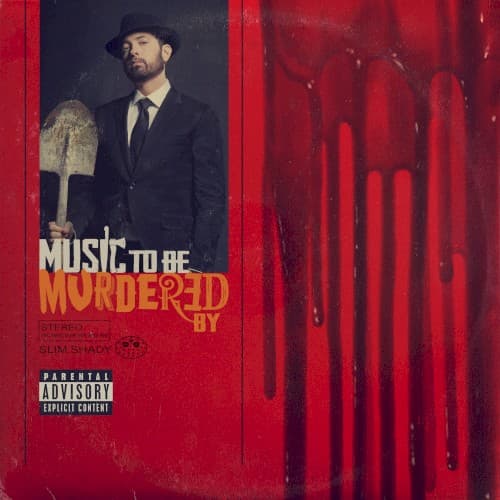
Music to Be Murdered By arrives with a thesis it never commits to. The Alfred Hitchcock concept promises murder as metaphor, darkness as method, but the actual album is seventy-four minutes of Eminem working every angle he knows: shock-value punchlines, technical reveal, radio bids with Ed Sheeran, gun control commentary, horrorcore, posse cuts with the old guard. The Hitchcock samples bookend the tracklist and then vanish, leaving twenty songs that could have been pulled from three different projects. The problem is not that Eminem lacks skill in 2020; the problem is that he uses all of it at once with no filter, no arc, and no reason for any of this to sit on the same album.
The version of Eminem that shows up on "Darkness" and "You Gon' Learn" is the one worth hearing: focused, purposeful, willing to let the concept lead. The version that shows up on "Those Kinda Nights" and "Stepdad" is chasing punchlines and shock for their own sake, the same mode that made Revival unlistenable. Music to Be Murdered By splits the difference and loses the argument. It is the sound of an artist who can still rap circles around his peers but cannot decide what he wants to say, so he says everything and hopes twenty tracks will bury the question. The result is his most technically accomplished album since Recovery and also one of his least necessary, a record that works in isolated stretches but collapses under its own length and lack of discipline.
When Dre Shows Up, the Album Remembers It Has a Sound
The production on Music to Be Murdered By splits into two camps: the Dr. Dre material, which gives the album its only sonic identity, and everything else, which sounds like Eminem scrolling through a producer folder. Dre returned for the first time since Recovery, and his fingerprints are all over the back half: the live-instrument warmth and careful arrangement that the rest of the album lacks. The drums knock without burying the mix, the basslines move, and the keys give Eminem space to breathe. These are the only tracks where the beat serves the rapping instead of just holding the tempo.
The rest of the production comes from a small army—D.A. Got That Dope, Royce da 5'9", The Alchemist, Ricky Racks—and most of it is trap-adjacent beats with minimal melody and interchangeable drum programming. Some tracks are serviceable but thin, just bass hits and hi-hats waiting for Eminem to fill the silence. Others are raw and skeletal, which fits the aggression but offers nothing to return to once the verse is over. The Alchemist's work is the rare exception: a psychedelic sample flip from Pescado Rabioso that gives the track texture and menace.
But too much of the album sounds like beats selected for their lack of personality, chosen so Eminem's voice can dominate without competition. The problem is that Eminem in 2020 needs the production to give him structure; left to his own devices, he fills every bar with syllables and every track with tangents.
The writing operates in two modes: when Eminem has a subject, he can still build a verse with clarity and purpose, and when he does not, he defaults to technical exercise and punchline sprints. One track serves as the album's centrepiece, a first-person narrative that alternates between the Las Vegas shooter's perspective and Eminem's own struggles with fame and substance, both preparing for a performance that ends in self-destruction. The concept is heavy-handed, but the writing earns it: the double meanings land, the imagery is specific, and the final turn into a gun control plea feels like the end of an argument rather than a tacked-on message. Another track is a rare example of focused writing, Eminem tracing his come-up and the lessons that came with it, no diversions.
But the rest of the album drifts. One track is shock-rap about killing his stepfather with no payoff beyond the violence. Another is a club track where Eminem tries on a melodic flow and delivers relationship punchlines that sound like they were written in 2004. Yet another is a relationship autopsy with no stakes and no reason to exist.
The guest verses are solid and largely wasted. Royce da 5'9" appears on three tracks and delivers every time, particularly on one where he opens with a verse that sets the posse-cut tone before Kxng Crooked and Joell Ortiz follow. Black Thought and Q-Tip turn in classic performances over a Mr. Porter boom-bap beat, and for four minutes the album remembers what Eminem used to sound like. Juice Wrld's posthumous hook is competent but underused, more a placeholder than a feature.
Young M.A matches Eminem's aggression but gets buried in the mix. The problem is not the features; the problem is that Eminem does not build songs around them. They show up, do their job, and leave, and the album moves on to the next idea before the previous one has finished.
The delivery is where Eminem still separates himself from everyone else and also where the album's lack of focus becomes most obvious. One verse is a technical marvel, 10.65 syllables per second, a new record even for him, and it is thrilling for exactly as long as it takes to realize the verse is not about anything. He is rapping fast because he can, switching flows every four bars because he can, packing every line with internal rhymes because he can. The skill is clear, but skill without purpose is just demonstration.
The album opens with Eminem in full combative mode, firing at critics and doubters with the same relentless flow that defined Kamikaze, and it works for three minutes before the lack of variation becomes exhausting. When he slows down, the melodic attempts feel strained, his voice not built for the singing he keeps trying. The album's best performances come when he locks into a single flow and lets the subject guide the cadence, and the verses land harder for it.
An Album Fighting Itself from Start to Finish
Music to Be Murdered By has no sense of sequence. The first four tracks move from Hitchcock intro to combative opener to posse cut to interlude, all fine in isolation, but then a pop-rap club track drops into the middle of the aggression with no transition and no reason. The album lurches between modes: technical display, gun control statement, ballad about Eminem's father, boom-bap posse cut, horrorcore. None of these ideas are bad on their own, but stacked together they cancel each other out.
The album has no argument, no through-line, no reason for any of this to follow anything else. The sequencing improves slightly in the back half when the Dre material takes over. A brief stretch forms where the production stays consistent and the writing tightens, and for ten minutes the album feels like it knows what it wants to be.
Then the album pivots back to trap drums, and the closing posse cut has nothing to do with anything that came before. The interludes frame the tracklist but do no actual work: the Hitchcock samples are atmospheric set dressing with no connection to the music. If the concept is murder, the album never explains what is being killed or why we should care.
The length is the final problem. At twenty tracks and sixty-four minutes, Music to Be Murdered By has no filler in the traditional sense—every track is fully realized, every verse is technically proficient—but half the album is still unnecessary. Multiple tracks could be cut without losing a single idea, and the remaining thirteen would form a much stronger album. Eminem has not released a focused project since The Eminem Show, and this album is the latest proof that he either cannot or will not edit himself.
The Best Eminem Album Since Recovery That Still Is Not Good Enough
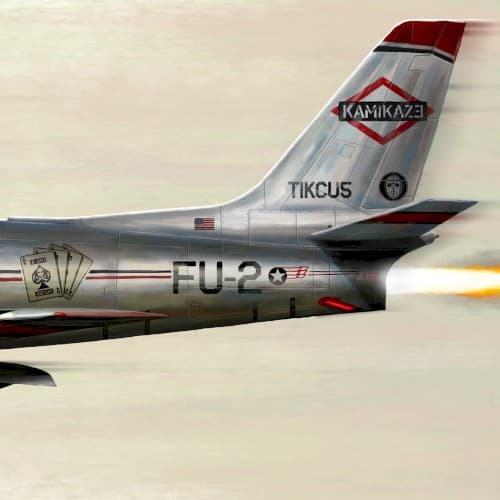
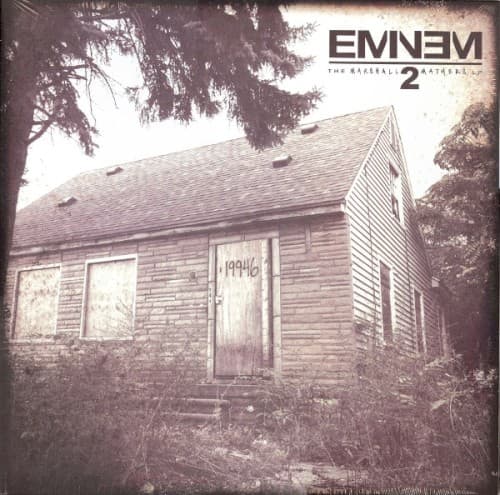
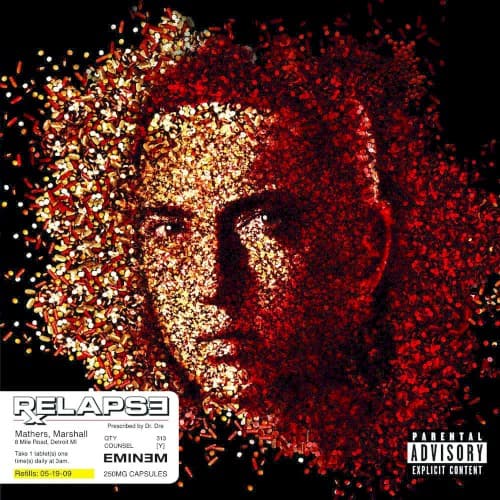
Music to Be Murdered By ranks in the middle of Eminem's catalog: better than the disaster of Revival, more consistent than the unfocused Relapse, more ambitious than the reactive Kamikaze, but nowhere near the focus of his first three albums. It sits just above Recovery in quality, which is not a compliment. The Dre-produced material is the best work Eminem has done in a decade, and one track is the best single he has written since The Marshall Mathers LP 2. But the album as a whole is a sprawl, seventy-four minutes of ideas that never cohere, technical skill that never finds a subject worth the effort, and a concept that gets mentioned twice and then forgotten.
This album is for Eminem diehards who want to hear him rap at the highest technical level and do not care whether the songs go anywhere. If you are still defending Revival, you will find things to love here. If you thought Kamikaze was a return to form, this album will frustrate you by repeating the same lack of editing.
If you have not listened to Eminem since The Eminem Show, this will not bring you back. The pop-rap tracks are skippable on first listen. The horrorcore and shock-value material is Eminem on autopilot. The Dre stretch and the posse cuts are where the album earns its runtime.
Start with the tracks where Eminem sounds like he has something to prove beyond his syllable count. If those work, move to the tracks where the writing and production both show up. Skip the club tracks and horrorcore entirely unless you are committed to hearing every bar. If you want to understand where Eminem is in 2020, this album will tell you: still one of the best technical rappers alive, still capable of writing a great song when he focuses, and still unable to build a great album because he refuses to choose a direction and commit.
For a deeper dive into Eminem's late-period work, Kamikaze is leaner and angrier, and The Marshall Mathers LP 2 is more ambitious. Music to Be Murdered By is the sound of an artist who can do everything and has forgotten why any of it matters.
Track by track
Track Listing
Premonition (intro)
SolidEminem opens in full combative mode, rapping over minimal Dre production, addressing critics and doubters with the same relentless aggression that defined Kamikaze. The flow switches every eight bars, showcasing technical range, but the lack of a coherent subject makes it feel like a warm-up rather than a statement. The Hitchcock sample sets a tone the album will not maintain.
Unaccommodating
WeakThe controversial Manchester bombing line overshadows everything else on this track. Young M.A delivers a solid guest verse, but the shock-value writing and skeletal Suby production make this feel like Eminem chasing controversy for its own sake. The aggression is real, but the purpose is missing, and the line in question is indefensible and tasteless, drawing focus away from any technical merit the verses might have.
You Gon’ Learn
StandoutOne of the album's most focused tracks. Eminem and Royce trade verses about the come-up, the lessons learned, and the hunger that drove them, and for once the writing has a clear subject and sticks to it. White Gold's hook ties the verses together, and the Royce production is raw and direct. This is Eminem with something to say and the discipline to say it cleanly.
Alfred (interlude)
SolidA brief Hitchcock sample that does atmospheric work but no narrative work. Sets a mood the album will not sustain.
Those Kinda Nights
WeakA club track with Ed Sheeran that has no business on this album. The pop-rap melody, the relationship punchlines, the D.A. Got That Dope production—it all sounds like a Revival leftover, and it kills the momentum built by the opening tracks. Skip it.
In Too Deep
WeakAnother relationship autopsy, this time with no hook and no stakes. Eminem runs through a breakup with technical precision and zero emotion, and the minimal Suby production leaves the verses exposed with nothing to say. Filler.
Godzilla
SolidThe Juice Wrld feature is fine but underused, a placeholder hook on a track built around Eminem's speed. The third verse breaks his own record at 10.65 syllables per second, and it is thrilling in the moment—pure technical dominance, flow switches every four bars, internal rhymes stacked on top of each other. But once the novelty wears off, the verse is about nothing, just Eminem proving he can still rap faster than anyone alive. The D.A. Got That Dope beat is serviceable trap with minimal melody, and the song has no replay value beyond the speed showcase.
Darkness
StandoutThe album's centrepiece and its only fully realized concept track. Eminem alternates between the perspective of the Las Vegas shooter preparing for the massacre and his own struggles with fame and pills, both building to a performance that ends in self-destruction. The double meanings land—"spotlights" as stage lights and rifle scopes, "going out with a bang" as both a concert and a shooting—and the final turn into a gun control plea feels earned rather than tacked on. The production from Eminem, Royce and Resto is sparse and menacing, letting the verses breathe. The concept is heavy-handed, but the writing justifies it. This is the best song Eminem has written in years, and it proves he can still build a narrative when he chooses to focus.
Leaving Heaven
SolidA ballad about Eminem's father, with Skylar Grey providing the melodic hook. The subject matter is familiar—Eminem has been writing about his parents for two decades—and the song adds nothing new to the conversation. His attempts at melody in the verses feel strained, and the track drags at over four minutes. Solid writing in isolated bars, but no reason to exist.
Yah Yah
StandoutThe album's best pure posse cut. Mr. Porter delivers a classic boom-bap beat, and Eminem, Royce, Black Thought, Q-Tip, and Denaun all show up with focused verses. Black Thought and Q-Tip remind you what Eminem used to sound like, and Eminem himself locks into a single flow and lets the beat guide him. The Busta Rhymes sample ties the verses together, and for four minutes the album sounds like it knows what it wants to be. Essential.
Stepdad (intro)
SolidA brief Dre-produced intro that leads into the next track. Atmospheric but inessential.
Stepdad
WeakHorrorcore about killing his stepfather, with no payoff beyond the violence. The Alchemist's psychedelic sample flip from Pescado Rabioso gives the track real texture, but the writing is shock for shock's sake, and the subject has no stakes. Eminem has done this better before.
Marsh
SolidA slower, more introspective track where Eminem reflects on his career and his place in the game. The production from Eminem and Resto is minimal, and the writing is solid if unremarkable. Not essential, but not filler either—just a competent deep cut.
Never Love Again
SolidA metaphor track where Eminem compares his relationship with drugs to a romantic relationship. The concept is transparent, but the writing is sharp and the Dre production gives it weight. The live instrumentation and careful arrangement make this one of the album's better-sounding tracks, even if the subject matter is well-trodden ground for Eminem.
Little Engine
StandoutThe best Dre-produced track on the album. The beat builds around chopped strings, rolling snares, and a bassline that moves, and Eminem responds with a locked-in verse about proving doubters wrong. The Hitchcock sample at the top sets the tone, and the production gives Eminem space to breathe. This is what the entire album should have sounded like: focused, purposeful, and built around a beat with real personality.
Lock It Up
StandoutAnother strong Dre track, this time with Anderson .Paak on the hook. The bass glides, the horns sit in the pocket, and Eminem delivers a verse that stays in the same flow for more than eight bars, which is rare on this album. .Paak's hook is understated and effective, and the song feels like an actual collaboration rather than a guest spot. One of the album's most replayable tracks.
Farewell
SolidA mid-tempo track with a Serani sample and competent Ricky Racks production. The writing is fine, the flow is fine, but the song has no real identity and no reason to be four minutes long. It fills space without adding anything.
No Regrets
SolidEminem reflects on his career and the sacrifices made, with Don Toliver providing a hook that does not quite fit. The D.A. Got That Dope production is minimal trap drums, and the verses are technically proficient but unfocused. The subject matter has potential, but the execution is scattered.
I Will
StandoutThe album's closing posse cut, with Royce da 5'9", Kxng Crooked, and Joell Ortiz. Royce opens with a strong verse that sets the tone, and the rest follow with solid performances. The Eminem and Resto production is raw and direct, and the song works as a showcase for all four rappers. Not as essential as "Yah Yah," but a strong closer that reminds you Eminem still has peers who can match him bar for bar.
Alfred (outro)
SolidThe Hitchcock sample returns to close the album with the same line that closed the 1958 original. A conceptual bookend that does no real work.
Frequently Asked Questions
Is Eminem's Music to Be Murdered By worth listening to?
What are the best songs on Music to Be Murdered By?
How does Music to Be Murdered By compare to Eminem's other albums?
Genres
Styles