The scorecard
8.0/10 · Great
- Writing25%
- 8.0
- Production25%
- 8.5
- Delivery15%
- 8.0
- Cohesion15%
- 8.0
- Originality10%
- 7.0
- Replay value10%
- 8.0
Metaphors on "I Know" and the dealer-as-brand storytelling of "Blue Magic" are carried through with precision, though "Say Hello" and "Party Life" drift from the premise.
Live horns and strings replayed over 1970s soul on "Roc Boys (And The Winner Is)..." and "Pray" give the record warmth and a dimensional sound that few rap albums achieve, though some Hitmen cuts lean glossy.
Jay-Z adjusts his cadence to each beat and sounds relaxed and cocky on "Success", though a few verses feel cautious next to his early work.
The film-scene framing and a strong opening run give clear shape, though the second half loosens and two bonus tracks sit slightly apart.
A film-led concept album built on live period instrumentation was fresh for 2007 rap, though it returns to familiar subject matter.
The best songs and the brisk first half hold up on repeat plays, while the weaker middle tracks are easy to skip.
Jay-Z American Gangster: How a Movie Gave Him Back His Edge
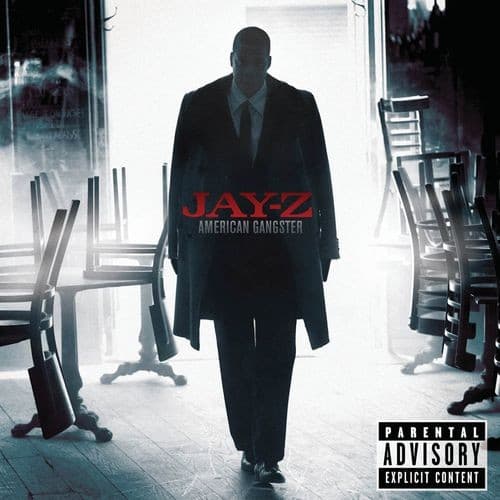
American Gangster works because a limit made Jay-Z better. Handed a film to react to, he stopped writing like a man defending a throne and started writing like a man editing a screenplay, and the discipline shows in nearly every verse. This is a concept album in the strict sense: songs framed as scenes, a period palette of live horns and strings, and a narrator who treats his own legend as material to be examined rather than polished. It is the most focused record Jay-Z made after retiring and un-retiring, and the strongest argument that a rapper in his late thirties can still write with a sharp eye.
The record arrived after Kingdom Come, a comeback that critics found bloated and uncertain, and that context explains why this one sounds so relaxed. The fact sheet notes that he kept the film playing on monitors above the booth while recording, and the effect is audible: instead of chasing the current sound, he lets the story set the tempo. The result is a set of songs with clear subjects, clean arcs and a consistent point of view. A drug dealer's rise, the arithmetic of the corner, the cost of the money, and the self-regard that comes with surviving it, all filtered through a man who now sees the whole picture.
My argument is that this is Jay-Z's tightest late-period album and a better record than its reputation as a movie tie-in suggests. It does not have the ambition of his early classics, and it loses points for a handful of songs that wander away from the premise. But the writing is more specific than anything he had made in years, the production is richer than a movie tie-in would normally get, and the pace is brisk enough that the weaker tracks rarely get a chance to hurt it. The sections below look at how the writing and sound work, where the sequence peaks and sags, and where the record sits in his catalog.
Corner Math, Live Horns and a Narrator Who Edits Himself
The writing is the album's best argument. Jay-Z returns to the language of the corner, but with a documentarian's detachment: weights, margins, loyalty and paranoia are described precisely, and the moral accounting is surprisingly honest. He is at his sharpest when a song takes a metaphor and pushes it all the way through, treating a drug, a woman and a career as the same kind of addiction. A review in the fact sheet pointed to exactly this: the layered metaphors about trafficking, music and relationships are what give the album the multidimensional quality of classic rap. The rhyme schemes are tidy, the punchlines are dry rather than showy, and the verses end where they should instead of running on.
His delivery is the other half. The flow is conversational and relaxed, cooler than on the previous record and more varied in pace, with a cockiness that comes from confidence rather than insecurity. He adjusts the cadence to each beat, rapping looser over the horns and tighter over the minimal drums, and he rarely sounds like he is working. That ease is also a limitation. A reviewer in the fact sheet said the choosing of words now seems more careful than instinctive, and on weaker tracks the care reads as caution; the verses are competent, but the hunger of his first records is missing.
The production is built around 1970s soul and funk, and it is the album's most distinctive feature. Diddy and the Hitmen supply most of the beats, and the Neptunes, Just Blaze, Toomp, No I.D. and others contribute as well. The key detail is that musicians were brought in afterward to replay and expand the parts, with live horns, strings, drums and percussion made from bottles. That is why the record sounds warm and dimensional rather than like a sample collage. The arrangements are lush without being retro for its own sake, and they give the narration room to breathe.
The weaknesses are real. The Hitmen's work, while polished, tilts toward glossy at times, and a few songs sound like they belong to a different, more commercial record. "No Hook" is a smart idea executed with a flat beat, and "Party Life" sounds like a track from a more commercial album. The album also treats its theme loosely in the second half, drifting from the gangster story into general reflections on fame and politics. That drift is not fatal, but it breaks the spell that the first half builds so carefully.
Compared to his contemporaries, Jay-Z remains the model of late-career composure: he does not chase trends, and his sense of structure is better than almost anyone's.
A Film in Fifteen Scenes: Pacing the Gangster Story
The sequence is the album's second great strength. It opens with a brief spoken introduction that sets the film framing without overstaying, then moves quickly into the first real songs, which establish the tone, the sound and the narrator's perspective. By the time the first celebratory horn-driven single arrives, the listener already understands the world, and the song's triumph lands as a payoff rather than a standalone hit.
The first half is close to flawless pacing. Each track has a clear function, the moods alternate between swagger and unease, and the running time per song is just long enough to make a point. The flow from reflective to celebratory and back keeps the story moving, and the guest verses are placed to change texture rather than to fill space. Lil Wayne and Beanie Sigel each appear briefly and well.
The sag starts in the second half, when the concept loosens. Several mid-album songs rely on a mood the first half already established, and the political track runs long enough to feel heavy next to its neighbors. The album recovers with a strong run of closing tracks, including the Nas collaboration and a pair of bonus songs that fit the theme well enough to justify their inclusion, though they sit slightly apart from the main sequence in tone.
At fifteen tracks, it is a little long for how tightly the best songs are made. Cutting two or three mid-album cuts would strengthen the finish without losing anything essential, and the album would feel closer to the short, sharp record that its premise promises. Still, the length is largely earned by the quality of the highs, and the final stretch is strong enough to make the full running time feel worth it. This is an album to play in order: the opening introduction and the first half build a case that the later songs cash in.
The Late-Period High Water Mark Before 4:44
American Gangster is Jay-Z's best album after his first retirement and one of the most consistent records of his career, though it sits below 4:44 on our scale and above Watch the Throne. That ordering is deliberate. The later record is more personal, more daring and more finished, while this one is more controlled but less revealing. Watch the Throne trades focus for spectacle, and American Gangster, for all its occasional drift, is easily the more disciplined listen.
It is for listeners who like Jay-Z best when he is telling stories, who value live instrumentation, and who want a rap album with a clear idea. Fans of 1970s soul-sampling rap will feel at home, and anyone who has only heard the hits will find a record with more shape than a greatest-hits collection. Those who want the raw hunger of his early work should look elsewhere, since this is a more composed and calculated performance. Listeners who dislike concept albums, or who do not care for the Hitmen's glossy side, may also find it too tidy.
The record has aged well. The soul-and-funk arrangements avoid the dated sheen that hurt many 2007 releases, and the writing about ambition and consequence has not dated at all. It also holds up as a precursor to the more reflective Jay-Z that would follow, and the fact that it earned a spot near the top of several year-end lists, including a number-one placement from one outlet, shows it landed with critics. The commercial results were strong, too, with a number-one debut and platinum certification within a month.
Start with "Roc Boys (And The Winner Is)..." for the peak of the sound, "I Know" for the most inventive writing, and "Success" for the guest-verse chemistry. After that, go to 4:44 to hear the same writer with fewer defenses, or to Watch the Throne for the scale-and-spectacle counterpoint. American Gangster's lasting achievement is simple: it proved that Jay-Z's best subject was still himself, seen at a distance.
Track by track
Track Listing
Intro
SolidA spoken introduction performed by Idris Elba, running two minutes. It sets the film framing and gets out of the way. Short, atmospheric, and effective as a title card.
Pray
StandoutProduced by Diddy, Sean C and LV, this is the first full song, slow and ominous, with a heavy mood and a measured flow. Jay-Z sets the tone with controlled, unhurried delivery, and the beat establishes the soul-and-strings palette. It is a strong start that earns its four-plus minutes, even if it is more atmosphere than hook.
American Dreamin'
StandoutWith Mario Winans assisting the Hitmen, the beat is smooth and wistful, and the verses treat the American Dream as a sales pitch. The writing is thoughtful and the delivery crisp. A mid-tempo highlight that deepens the theme without calling attention to itself.
Hello Brooklyn 2.0
SolidA bouncy guest-feature track with Lil Wayne and a Beastie Boys-based beat from Bigg D. It is lively and fun, though it feels like a different album from the surrounding soul material. Wayne's verse is energetic and Jay-Z is relaxed, but the song is slight.
No Hook
SolidA hookless track where the point is the verse itself, with a stripped Hitmen beat. The concept is smart and the rapping is solid, but the beat is flat and the song never builds. One of the album's quieter moments and one critics found hesitant.
Roc Boys (And The Winner Is)...
StandoutThe album's centerpiece and a single that Rolling Stone named the best of 2007. A Menahan Street Band sample, loud horns and a victory-lap flow make a celebration with an edge; Jay-Z sounds delighted and the arrangement keeps pushing forward. It is the clearest demonstration of why the live-instrument approach worked. A genuine peak, and probably the best single of his late period.
Sweet
SolidA smooth Hitmen production with a measured flow. It is well made but sits in the shadow of the preceding single. A solid album cut that works as a cool-down.
I Know
StandoutProduced by the Neptunes, this is the record's most inventive writing. Jay-Z extends a single metaphor across the whole song, and the beat is minimal and slinky. The delivery is cool and sly, and the idea is carried through without strain. It is a standout, and shows why the album earned its reputation for lyrical craft.
Party Life
WeakA Hitmen production with a bright, upbeat feel and a loose flow. It is energetic enough but lacks the specificity of the better songs, and it feels like a detour from the concept. Filler, though pleasant.
Ignorant Sh*t
StandoutProduced by Just Blaze, with Beanie Sigel on a verse, this is a hard-edged, punchy cut with a feisty delivery. It is a remake of an earlier song and works as a burst of old-school aggression after the smoother material. Sigel contributes a solid verse.
Say Hello
SolidProduced by Toomp, this is the album's longest track and its most political, touching on censorship and the Jena 6 controversy. The beat is moody and the intent is sincere, but the writing is more earnest than sharp, and it runs long. A critic in the fact sheet called it wavering, and that is fair. Interesting, but not among the best.
Success
StandoutWith Nas, produced by No I.D. and Jermaine Dupri, the track is the album's best guest collaboration. The two rappers trade confident, relaxed verses over a spacious soul beat. It has the swagger the rest of the record sometimes lacks, and it has real chemistry. A highlight of the second half.
Fallin'
StandoutProduced by Dupri and No I.D., a reflective, soulful cut. The tone is introspective, and it works as a quieter counterpart to the earlier celebrations. Solid, if not as memorable as the best tracks.
Blue Magic
StandoutA Neptunes-produced bonus track and the first single, which samples film dialogue. It is a slick, menacing piece of storytelling, with a sleek beat and a precise, confident flow. Critics singled it out as a highlight, and the reputation is deserved. It is one of the cleanest expressions of the album's idea, a drug dealer narrated as a brand.
American Gangster
StandoutA Just Blaze-produced bonus track that closes the record on a concise, self-contained note. The beat is dramatic and the performance is steady. It serves as a fitting bookend to the opening, even if it is not essential.
Frequently Asked Questions
Is American Gangster a good Jay-Z album?
Is American Gangster based on the movie?
What are the best songs on American Gangster?
Styles