Scorecard: 7.9/10 · Great
How we score- Writing(25%)
- 8.5
Staples narrates Long Beach gang life with unsentimental precision, turning specific imagery of corner economics and survival calculus into a sustained portrait of adolescence under siege.
- Production(25%)
- 8.0
No I.D. builds cold, minimal frameworks that leave room for Staples' voice, though the twenty-track sprawl reveals more consistency than variety across the two discs.
- Delivery(15%)
- 7.5
Staples' monotone cadence and clipped flow make violence sound routine rather than dramatic, a restraint that serves the concept but limits dynamic range.
- Cohesion(15%)
- 7.0
The double-album structure splits childhood memory from harder present-tense survival, but twenty tracks test the thesis and several mid-album stretches sag under repetition.
- Originality(10%)
- 8.0
The refusal of gangsta-rap mythmaking in favor of deadpan testimony marks a deliberate break from West Coast precedent, closer to Earl Sweatshirt's introspection than to any G-funk inheritance.
- Replay value(10%)
- 7.5
The bleakest tracks hold up through repeated listens, but the length and the sameness of tone make full-album replays feel more like a commitment than a choice.
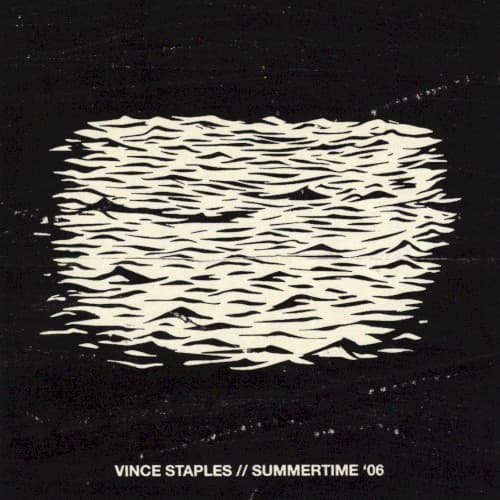
Vince Staples Summertime '06 — The West Coast Album That Refused to Celebrate
The thesis of Summertime '06 arrives in the flatness of Staples' voice on Norf Norf, where he recounts Long Beach gang initiations and corner shootings in the same drained monotone he uses to order lunch. There is no romance in the retelling, no bass-heavy triumph, no defiant boast that survival equals victory. The album argues that the West Coast gangsta-rap tradition built a mythology around circumstances that deserve none, and Vince Staples spends twenty tracks dismantling it from the inside. Where his predecessors turned street life into cinema, he turns it into coroner's testimony.
The stakes are generational. Summertime '06 is a coming-of-age record set in 2006 Long Beach, the summer Staples turned thirteen and watched the neighborhood eat itself. The double-album structure splits the story: disc one holds fragments of childhood and confusion, disc two the harder present tense of someone who survived and cannot forget. No I.D. produces most of the album with a deliberate coldness, beats built from negative space and barely-there bass, refusing the funk inheritance that defined West Coast rap for three decades. The production never celebrates and the writing never mythologizes. What remains is the clearest, least sentimental portrait of West Coast gang life a major-label rap album had offered in years, and the first debut to suggest that clarity might matter more than charisma.
The problem is the length. Twenty tracks test any thesis, and this one begins to repeat itself by the middle of disc two. Staples has the writing and the nerve to justify a statement this size, but not quite the variety of subject or sound to make every song feel necessary.
Cold Frameworks and Clipped Sentences
No I.D. produces fourteen of the twenty tracks, and his fingerprints are all over the album's refusal to seduce. The beats are minimal in a way that sounds expensive: hi-hats that tick like stopwatches, bass that pulses rather than knocks, synth tones held until they curdle. Lift Me Up builds a slow climb from almost nothing, DJ Dahi adding a co-production credit but keeping the same aesthetic of restraint. Clams Casino handles Norf Norf and Summertime with his usual haze, but even his work here feels colder than his production for A$AP Rocky, more dread than dream. Christian Rich's work on Señorita, sampling Future, is the only track that gestures toward radio, and it still sounds like something playing through a busted speaker two blocks away. The production refuses the entire G-funk playbook: no Parliament samples, no talkbox, no funk bass that makes violence sound like a party. The closest the album gets to warmth is Jump Off the Roof, where a looped Czesław Niemen sample provides a ghostly backdrop for Staples describing escape fantasies that go nowhere. The soundscape matches the writing, both committed to making gang life sound like what it is rather than what it symbolizes. The problem is that minimalism at this scale risks monotony. By the time Street Punks arrives midway through disc two, the beats have started to blur into each other. The aesthetic is consistent, but consistency across twenty tracks becomes sameness. Staples writes in clipped sentences, images delivered without interpretation. He describes a friend getting jumped into a gang on Norf Norf, another getting killed on 3230, corner economics on Dopeman, all in the same flat affect. The specificity is the point: he names Ramona Park, references exact streets, describes the boredom and the violence as two parts of the same routine. The writing refuses metaphor and refuses uplift. When he says the neighborhood is stuck, he means it literally. The rapping itself is technically solid but not flashy, flow more about rhythm and timing than wordplay. He is not trying to impress anyone with his pen; he is trying to get the story correct. Guest verses are few and mostly brief. Daley sings a hook on Birds & Bees, Jhené Aiko provides atmosphere on Lemme Know, Kilo Kish adds texture to Dopeman and Surf. None of them shift the album's tone. Earl Sweatshirt contributes additional vocals to Ramona Park Legend, Pt. 2, a perfect match for Staples' own drained delivery. The features serve the concept rather than providing relief from it. The one weakness in the production is its unwillingness to break its own rules. A twenty-track album built on refusal eventually needs a moment of release, and this one never provides it.
Two Discs, One Long Descent
The album is split into two ten-track discs labeled Summertime and '06, the first disc nostalgic in theory, the second disc present-tense. In practice the distinction is more conceptual than sonic. The first stretch does contain the album's most overtly melodic moments, both gesturing toward something like hope, but by the time the midpoint arrives, the coldness has already set in. The back half is harder and more focused, but it also reveals how much ground the album has already covered. The sequencing is deliberate, but the pacing is not. The album peaks early, then maintains the same intensity for another sixty minutes without a meaningful shift in tone or tempo. The interludes function as chapter breaks but add little beyond their thematic function. The final track runs under a minute and offers no resolution, which is the point but also a choice that leaves the album feeling unfinished rather than open-ended. The length is the album's most obvious flaw. At fourteen or fifteen tracks, this would be a tighter, more powerful record. At twenty, it is a statement that occasionally feels like it is arguing with itself. The concept justifies the breadth, but the execution does not fully earn it.
The Debut That Chose Clarity Over Flash
Summertime '06 is the more ambitious album, Big Fish Theory the more successful one. This debut has the nerve to build a double album around refusal and to reject the entire sonic and thematic legacy of West Coast gangsta rap while still writing about the same streets. It is a harder, colder, more serious record than anything Staples has made since, and it establishes him as a writer willing to strip a story down to its ugliest components without flinching. The problem is that the thesis is clear by track eight and the album has twelve more to go. The second disc in particular struggles to find new ground, and the unvarying tone that makes the first half so striking becomes a limitation by the end. This is for listeners who want West Coast rap that sounds nothing like West Coast rap, who care more about writing than production, and who can handle an album that offers no catharsis and no escape. It is not for anyone looking for bangers or for background music. The best way in is Norf Norf, Lift Me Up, and Summertime, the three tracks that make the case most efficiently. Skip it if you need variety or if you find Staples' monotone delivery exhausting; the album doubles down on both. After this, hear Big Fish Theory to understand where he went next, trading autobiography for abstraction and swapping No I.D.'s minimalism for electronic maximalism. Then go back to DJ Quik's Safe + Sound or Kendrick Lamar's good kid, m.A.A.d city to hear the West Coast autobiographical tradition Staples is arguing against. Summertime '06 matters because it refused to play the game, and because Staples had the skill to make that refusal into a full-length argument. Whether he needed twenty tracks to make it remains the one question the album cannot answer.
Track Listing
Ramona Park Legend, Pt. 1
●A thirty-six second scene-setter produced by No I.D., establishing the Ramona Park setting and the album's refusal of warmth. More functional than memorable.
Lift Me Up
▲The first full track makes the album's aesthetic clear: DJ Dahi and No I.D. build a slow, tense beat that never drops, and Staples delivers verses about survival and paranoia with no dynamic shift. The hook is more hypnotic than catchy. This is the sound of someone waiting for violence that might not come today but will come eventually. The production's restraint gives Staples room to work, and he uses it to establish the dread that will fuel the rest of the album. One of the strongest early statements of intent.
Norf Norf
▲The album's most famous track and its thesis statement. Clams Casino's hazy, minimal beat provides the backdrop for Staples recounting gang initiations, shootings, and the routine brutality of adolescence in North Long Beach with no editorial distance. The flatness of his delivery makes the violence sound mundane, which is the point. The track works because Staples refuses to dramatize: he describes his friend getting jumped in the same tone he describes going to the store. It is the least romantic account of West Coast gang life on a major-label rap album since the genre began mythologizing it. Essential to understanding the album.
Birds & Bees
▲DJ Dahi returns with a beat that adds slightly more melody, and Daley sings a hook about survival and relationships. Staples uses the space to describe the economics of street life and the impossibility of normal adolescence when everyone is playing a role in a script they did not write. Shorter than the surrounding tracks and more focused for it, though the sung hook feels like a concession to structure rather than a natural part of the song.
Loca
●No I.D. production with additional vocals from Olga Aguilar and Kilo Kish, building a slightly warmer atmosphere than the surrounding tracks. Staples describes relationships strained by the environment, love as another casualty of the block. Solid but not essential, the kind of track that serves the album's flow without standing out on its own.
Lemme Know
●Jhené Aiko provides atmosphere on the hook, and the production from No I.D., DJ Dahi, and Kidd allows for one of the album's rare moments of something like vulnerability. Staples describes the confusion of adolescence and attraction in a context where both are dangerous. The track is longer than it needs to be, stretching past three and a half minutes when the idea is exhausted by two, but Aiko's presence gives the album a brief shift in tone.
Dopeman
▲Joey Fatts and Kilo Kish contribute vocals to a short, sharp track about corner economics and survival. No I.D.'s beat is minimal even by this album's standards, just enough rhythm to keep Staples on track. The brevity works in its favor; the song makes its point and exits before it starts repeating itself.
Jump Off the Roof
▲No I.D. samples Czesław Niemen's Nie Jesteś Moja, creating the album's most overtly beautiful production, and Staples uses it to describe escape fantasies that go nowhere. Snoh Aalegra sings the hook, her voice providing the only real warmth on the entire first disc. The track is about wanting out and knowing there is no out, and the tension between the pretty production and the bleak content makes it one of the album's most effective moments. This is as close as Summertime '06 comes to offering hope, and even here the hope is a lie.
Señorita
●Christian Rich produces, sampling Future's Covered N Money, and the result is the album's closest approach to a radio single. The beat has more groove than anything else here, and Staples allows himself a slightly more melodic flow. Snoh Aalegra contributes additional vocals, adding to the track's relatively polished feel. It works as a single but feels like an outlier on the album, a concession to the need for something that could get played outside the context of the full statement. Effective on its own terms but not representative of the project as a whole.
Summertime
▲Clams Casino closes the first disc with a hazy, drifting beat built from a sample of Darwin's Theory's I Hope You'll Be. Staples reflects on the summer of 2006, the season that defines the album's entire narrative. The production is gorgeous in a distant, faded way, and Staples delivers some of his most reflective writing, trying to make sense of the year that stole his adolescence. The track earns its four-minute runtime and provides a strong close to the first half, though it leaves the album's thesis exactly where it was at the start.
Ramona Park Legend, Pt. 2
●Earl Sweatshirt adds vocals to a brief interlude produced by No I.D., marking the shift from memory to harder present tense. Functional as a divider between the two discs, forgettable as a standalone track.
3230
▲No I.D. production and one of the second disc's strongest moments. Staples describes the aftermath of a friend's murder with specificity and no sentimentality, the address in the title grounding the story in a real place. The beat is even more minimal than usual, just rhythm and dread, and Staples' flow is clipped and direct. This is the album's method at its most effective: take a specific tragedy, describe it without interpretation, and let the details do the work.
Surf
●Clams Casino and Ekko co-produce, and Kilo Kish returns for another atmospheric track. The title suggests escape, the lyrics describe entrapment. Solid but not essential, the kind of track that makes sense in sequence but does not demand individual attention.
Might Be Wrong
●No I.D. handles production and the track stretches almost four minutes, Staples working through doubt and survival guilt with guests Haneef Talib and eeeeeeee adding texture. The length is a problem; the idea is clear by the halfway point and the second half is repetition. This is where the album's commitment to its aesthetic starts to feel like limitation.
Get Paid
●Desi Mo guests on the album's second single, a No I.D. production that stays true to the album's minimal approach while adding slightly more energy. The track describes hustling and survival, Mo's verse matching Staples' matter-of-fact tone. It works as a single better than Señorita because it does not compromise the album's sound, but it still does not quite justify its inclusion beyond the label's need for promotional material.
Street Punks
●No I.D. production and another mid-album track that serves the concept without distinguishing itself. By this point in the second disc, the beats and the subject matter have started to blur together, and Street Punks does nothing to break the pattern. Competent but redundant.
Hang n’ Bang
●Aston Matthews guests on a short track produced by No I.D. and Kidd. At just over two minutes, it is brief enough to avoid overstaying its welcome. Matthews' verse is fine, Staples' is better, and the track ends before it has a chance to sag. Filler, but efficient filler.
C.N.B.
●James Fauntleroy provides additional vocals on a track produced by No I.D., DJ Dahi, and Kidd. The production is slightly more layered than the surrounding tracks, and Staples uses the space to describe gang affiliations and neighborhood loyalty with the same unsentimental clarity he has maintained for eighteen tracks. Strong on its own but exhausting in context, arriving too late in the album to feel fresh.
Like It Is
●The longest track on the album at four and a half minutes, produced by No I.D., DJ Dahi, and Kidd. Staples delivers extended verses that cover much of the same ground the album has already explored: survival, guilt, the impossibility of escape. The production is solid, the writing is solid, but the track suffers from its placement. By this point, the album has made its case multiple times over, and Like It Is feels like a restatement rather than a conclusion. The length works against it.
’06
●No I.D. produces a sub-one-minute closer that offers no resolution or catharsis. The track fades out as it begins, and the album ends mid-thought. Conceptually appropriate, since Staples is arguing that the story has no ending, but it leaves the listener with no sense of completion. Whether that is a strength or a weakness depends on your tolerance for unresolved narratives.