Style & Context
Influences
Alfred Hitchcock Presents title cards, film noir posters, True Crime Garage aesthetics
Location
The Detroit rapper uses horror as shield and sword against critics demanding he soften his content.
Visual Language
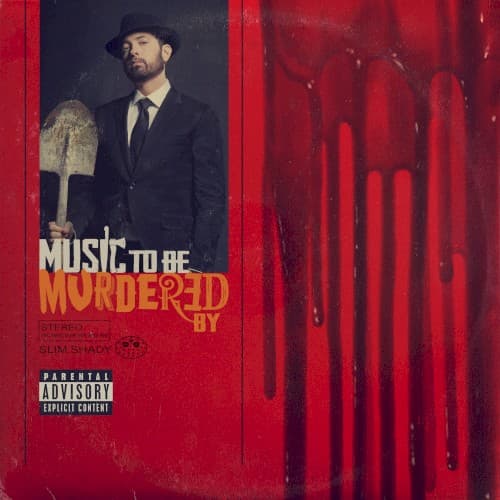
The deliberate grain and vintage treatment evoke 1950s television while modern post-production creates unsettling hyperrealism.
Symbols
Shovel held casually
The tool represents Eminem's ability to bury competitors and dig up uncomfortable truths about society.
Suit and fedora costume
The Hitchcock homage positions Em as director of his own violent narratives, controlling the horror.
Blood drips on corrugated metal
The descent pattern mirrors chart trajectories and the slow drain of life from the industry.
Where Sound Meets Image
The Hitchcock framing reflects album tracks sampling the director's spoken intros and exploring murder from multiple perspectives—true crime storytelling, fictional narratives, and metaphorical killing of opposition. The suited figure matches Em's technical precision and calculated wordplay throughout the project, while the blood represents the graphic lyrical content that got 'Unaccommodating' and other tracks flagged. The split design mirrors the album's tonal shifts between darkly comic horrorcore and serious commentary on gun violence and mortality. The corrugated metal texture evokes industrial Detroit, grounding the vintage Hollywood aesthetic in his hometown's working-class reality.
The cover helped normalize explicit horror imagery in mainstream hip-hop marketing during streaming era sanitization. Its success proved album art could still generate controversy and conversation when most covers vanish into playlist thumbnails. The Hitchcock connection introduced younger rap audiences to classic suspense aesthetics, creating a visual bridge between golden age cinema and modern horrorcore that influenced subsequent concept album packaging.