The scorecard
7.7/10 · Great
- Writing25%
- 7.5
- Production25%
- 8.5
- Delivery15%
- 7.0
- Cohesion15%
- 6.5
- Originality10%
- 9.0
- Replay value10%
- 7.5
Conversational rhymes favor playfulness over precision, but the sideways approach to everyday subjects opened new territory for the genre.
Q-Tip's sampling choices—Billy Brooks, RAMP, Rotary Connection—created a spacious, jazz-inflected template others followed for a decade, though the gentle mood sacrifices some impact.
Q-Tip's conversational flow opened space for a new kind of lyricism, even if his laid-back monotone has little range and Phife appears on only a handful of tracks.
The 14-track, 59-minute run holds together on the strength of its aesthetic and best material, though filler and inconsistent sequencing keep it from feeling fully realized.
In 1990, when every other group was competing to sound harder, this album was about frogs and lost wallets and moving butts—and it worked, though the template it set would be refined on later records.
The best tracks still sound fresh decades later and the production approach remains radical, though the deep cuts sag and the lack of dynamic range becomes more noticeable over time.
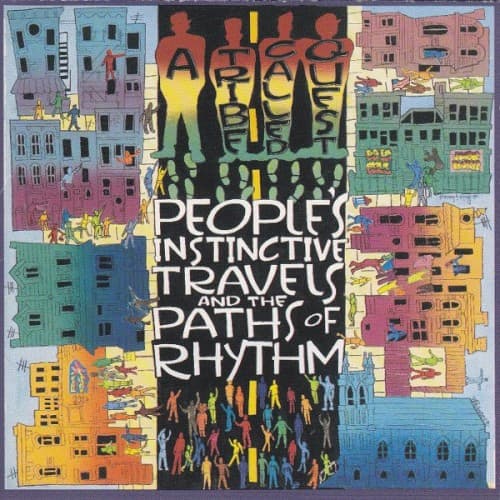
A Tribe Called Quest People's Instinctive Travels and the Paths of Rhythm — The Album That Made It Safe Not to Be Hard
In April 1990, when N.W.A owned the West Coast and Big Daddy Kane still owned New York, A Tribe Called Quest released an album about a lost wallet, a girl named Bonita, and the art of moving butts. No guns, no bravado, no tough-guy posturing—just four kids from Queens rapping over jazz breaks most producers had never heard of, recorded in a studio full of Native Tongues acts all doing the same thing. People's Instinctive Travels and the Paths of Rhythm was the quiet beginning of a revolution, the proof that you could be smart and strange and still rap, that the genre had room for more than one kind of voice. It became the first album to earn a five-mic rating from The Source, influenced everyone from Pharrell to Kendrick, and sits at the foundation of what we now call alternative hip-hop. The claim here is that it earned that status not by being flawless—it is too long, too scattered, and too reliant on Q-Tip's limited presence—but by being first, by opening a door no one else had the nerve to walk through.
The thesis is simple: this is the most important Tribe album that is also the least consistent. It set the template for everything the group would do better on The Low End Theory and Midnight Marauders, but it set the template as a rough draft, full of ideas that work and ideas that do not, held together by Q-Tip's ear for samples and not much else. The revolution was real, but the album itself is uneven, and the gap between its influence and its execution is what makes it fascinating. It is the sound of a group figuring out in real time what they wanted to be, and the fact that they figured it out at all—on their first try, in 1990—is the reason it still matters.
The Samples No One Else Was Touching
Q-Tip built this album in the tenth grade on pause tapes, learned how to use the SP-1200 watching De La Soul record 3 Feet High and Rising, and then went into Calliope Studios in late 1989 with Ali Shaheed Muhammad and started chopping records no one else cared about. The result is production that sounds like nothing else from 1990: gentle, spacious, full of background noise and odd textures, more interested in mood than impact. He sampled Billy Brooks, RAMP, Rotary Connection, Slave—artists most hip-hop producers had never touched—and when he did sample known names like Stevie Wonder or Lou Reed, he used breaks no one else was using. The beats feel like jazz because they move like jazz, loose and patient, with room to breathe. They are not trying to knock you over; they are trying to get you nodding.
The writing is conversational in a way that felt radical at the time and now feels like the foundation of a whole strain of rap. Q-Tip does not write punchlines or multi-syllable acrobatics; he writes the way people talk, with humor and specificity and a willingness to let a verse meander. The lost wallet story is goofy and detailed and completely unbothered by the fact that it is not about anything important. The verses about Bonita are flirtatious without being explicit, clever without showing off.
The approach is playful and casual, and it opened space for a kind of lyricism that did not exist in 1990, when everyone else was trying to prove something. The problem is that Q-Tip is the only one doing it most of the time. Phife admitted later that he barely showed up to the sessions, that he thought he and Jarobi were backups, and his absence is felt. When he does appear, the energy lifts, but those moments are rare.
The delivery is where the album shows its limitations. Q-Tip's voice is relaxed to the point of monotone, and while that fits the vibe, it also means the album has very little dynamic range. There are no peaks, no moments where the rapping grabs you by the collar. The flow is steady and unhurried, which works on the best tracks and drags on the rest.
Ali Shaheed Muhammad handled the scratching and programming, and his contributions give the album texture, but they cannot make up for the fact that the rapping itself rarely shifts gears. The guest appearances are minimal—there are none beyond background vocals—and the result is an album that feels like one person's vision more than a group effort, because that is what it was. Q-Tip was the only member present at every session, and it shows.
The Peaks Are Higher Than the Valleys Are Low
The album opens strong with a seven-and-a-half-minute groove that announces the aesthetic and mostly earns its length, then wobbles through the middle stretch before finding its footing again on the back half. The pacing is uneven because the album does not have a plan beyond putting the best tracks in the mix and hoping the vibe holds. It does, barely, on the first half: the clear singles and the strange, specific wallet story are exactly the kind of material that made the album matter. But by the time you reach the deep cuts in the middle and toward the end, the lack of variety starts to show. The beats are still interesting, but the rapping is not doing enough to justify another four or five minutes of the same tone.
The sequencing does not build to anything, and at 59 minutes the album is longer than it needs to be. The closer runs nearly six minutes, and while the Roy Ayers sample is lovely, the track feels like an outro stretched into a full song. The best version of this album is 10 or 11 tracks, but in 1990 no one was thinking that way yet. The result is an album with real peaks and a lot of pleasant but unremarkable material in between. The highs are high enough to carry it, but only just.
The Blueprint That Still Needs Editing
This is the fifth-best album in the Tribe catalog, behind The Low End Theory, Midnight Marauders, We Got It From Here… Thank You 4 Your Service, and Beats, Rhymes and Life, and the ranking is not close. It is the most influential and the least polished, the one that mattered most to the culture and the one that works least as a listening experience from front to back. The importance is real—this album changed what rap could sound like and who could make it—but importance and quality are not the same thing, and People's Instinctive Travels trades consistency for experimentation in a way the next two albums would not. If you are starting with Tribe, start with The Low End Theory, which does everything this album does but tighter and harder. If you are a fan of the group and want to hear where it all began, this is essential, but go in knowing that the best moments are separated by long stretches of mood music that does not go anywhere.
For casual listeners, this is a three-track album: the singles about Bonita, kicking it, and the lost wallet. Those three songs justify the album's reputation and hold up against anything the group ever recorded. For heads who care about lineage and influence, the whole thing is worth hearing once to understand how the door opened, even if the door was not perfectly hung.
It has aged well in the sense that the production still sounds fresh and the approach still feels radical, but it has also aged in the sense that you can hear the seams, the places where the group had not yet figured out how to sustain a vision across a full LP. Play it after The Low End Theory to hear how far they came in a year. Play it before Midnight Marauders to hear the template. Play it once because it is a landmark, and then decide whether the deep cuts are worth the return trip.
Track by track
Track Listing
Push It Along
StandoutThe opening track sets the tone and mostly justifies its seven-and-a-half-minute length with a Grover Washington Jr. sample that grooves without trying, background vocals that drift in and out, and verses that meander in the best way. Q-Tip is relaxed and confident, Phife appears briefly and adds energy, and the whole thing feels like an introduction to a sound no one had heard before. It is too long by a minute or two, but the sprawl is part of the point. The track makes space for itself and fills it without rushing. The fade at the end is perfect.
Luck of Lucien
SolidA Beatles sample and a Billy Brooks break combine into something loose and strange, with verses about a friend named Lucien that do not add up to much beyond a character sketch. Phife shows up and brings more personality than Q-Tip, whose delivery here is flat even by his standards. The track works as a vibe but not as a song; the idea is better than the execution.
After Hours
SolidA four-minute interlude that does not go anywhere. The beat is pleasant, the rapping is present but uninspired, and the whole thing feels like filler. This is the first place where the lack of dynamic range starts to show.
Footprints
StandoutStevie Wonder and Donald Byrd samples provide the foundation for one of the album's stronger deep cuts, with Q-Tip delivering verses that feel more focused than the previous two tracks. The hook is minimal but effective, and the sequencing choice to place it here, early in the tracklist, gives the album a second wind before the wallet story. The beat has real swing, and Ali Shaheed Muhammad's scratching adds texture without overwhelming the groove. This is the sound of the group starting to figure out what works.
I Left My Wallet in El Segundo
StandoutThe lost wallet story is exactly what made this album radical in 1990: goofy, specific, completely unbothered by the fact that it is not about anything serious. The Chambers Brothers sample is relentless, the verses are full of small details that make the story feel real, and the whole thing is funny without trying too hard. Q-Tip's deadpan delivery is perfect for the material, and the hook is the kind of thing you remember years later. This is the clearest example of the album's willingness to do something no one else would have attempted, and it works because the execution matches the ambition.
Pubic Enemy
SolidA typo in the title and a track that does not live up to the pun. The beat is solid, the rapping is fine, but nothing about it stands out. It is three and a half minutes of the same tone the album has been using for 25 minutes, and by this point the formula is starting to wear.
Bonita Applebum
StandoutThe best track on the album and one of the best songs Tribe ever recorded. The RAMP and Rotary Connection samples create something warm and hypnotic, and Q-Tip's verses are flirtatious without being crude, clever without showing off. The hook is perfect—simple, sticky, completely unforced. The production is minimal in a way that feels intentional, with space for every element to breathe. This is the song that made Pharrell change his life, and you can hear why. It is the sound of someone figuring out how to make something new that still feels like hip-hop, and it has not aged a day. The beat switch at the end is subtle and perfect.
Can I Kick It?
StandoutThe Lou Reed sample from Walk on the Wild Side is bold enough that it could have been a gimmick, but the track earns it with one of the album's most confident performances. The hook is a question that invites call-and-response, the verses are casual and self-assured, and the whole thing feels like a mission statement. The Lonnie Smith drums keep the groove steady without rushing, and the result is a track that works as both a single and a deep album cut. It is impossible to hear this and not nod, which is exactly the point. The simplicity is deceptive; the song does more with less than almost anything else on the record.
Youthful Expression
SolidA five-minute mood piece that does not earn its length. The beat is fine, the rapping is present, but the track does not build or go anywhere. By this point in the tracklist the lack of variety is a real problem.
Rhythm (Devoted to the Art of Moving Butts)
StandoutThe title is playful, the Funkadelic sample is energetic, and the track finally brings some tempo after several slower cuts. Q-Tip is more animated here than he has been in a while, and the result is one of the album's more replayable moments. It is not a classic, but it does the job it sets out to do: get the album moving again.
Mr. Muhammad
SolidA tribute track built on an Earth, Wind & Fire sample, with verses that feel more like a dedication than a full song. The idea is solid, but the execution is thin. At three and a half minutes it does not overstay its welcome, but it also does not leave much of an impression.
Ham ’n’ Eggs
StandoutPhife finally gets real space on a track, and the energy lifts immediately. The Funkadelic sample from Nappy Dugout is one of the album's funkiest beats, and both Phife and Q-Tip sound more engaged than they have in several tracks. The subject matter—vegetarianism and food choices—is strange and specific in the way that made the album matter, and the rapping is sharp enough to justify the five-and-a-half-minute runtime. This is the best evidence for what the album could have been if Phife had shown up more often. The back-and-forth dynamic between the two MCs is exactly what the rest of the record is missing.
Go Ahead in the Rain
SolidA Slave sample provides the backdrop for one of the album's quieter moments. The verses are reflective without being heavy, and the track works as a late-album breather. It is not filler, but it is not essential either. The production is lovely, but the rapping does not match it.
Description of a Fool
SolidThe closer runs nearly six minutes and feels like an outro stretched into a full track. The Roy Ayers sample is beautiful, the rapping is fine, but the song does not build to anything and the album just fades out. After 59 minutes, the lack of a real conclusion is felt. This is a pleasant way to end, but not a satisfying one.
Frequently Asked Questions
What is A Tribe Called Quest's best album to start with?
Why is People's Instinctive Travels considered influential?
What are the best tracks on People's Instinctive Travels?
How does People's Instinctive Travels compare to later Tribe albums?
Styles