Style & Context
Influences
Renaissance religious portraiture, film noir lighting, Wu-Tang mysticism
Location
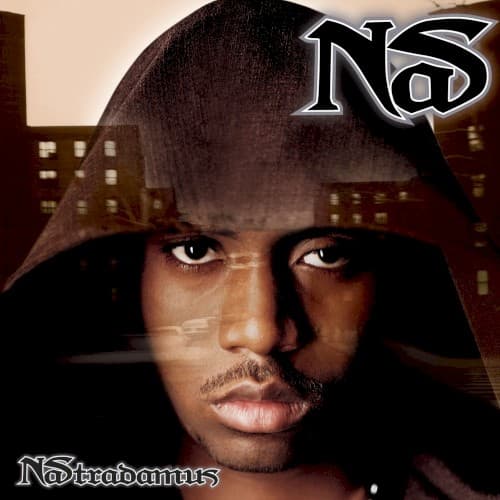
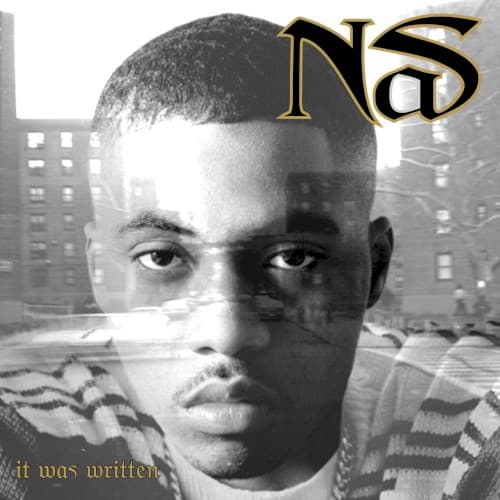
Queensbridge projects appear ghostlike behind Nas, anchoring mystical pretensions in concrete New York reality.
Visual Language
The layered exposure technique borrows from spiritualist photography while maintaining hip-hop's documentary realism.
Symbols
Medieval hood
The monk-like covering transforms Nas into a street prophet channeling Nostradamus's mystic authority.
Double-exposed projects
Queensbridge towers merge with his face, making the hood and the man inseparable entities.
Direct eye contact
Nas stares unblinking at the viewer, claiming the seer's power to witness truth others miss.
Where Sound Meets Image
The cover promises mystical wisdom and future-seeing bars that the album partially delivers through tracks examining fame's pitfalls and street prophecy. The hooded, shadowy aesthetic matches the album's darker production palette, moving away from Illmatic's raw documentary sound toward polished, ominous beats. The double exposure mirrors Nas's dual identity crisis—street poet versus commercial superstar—that runs through songs questioning his artistic direction and industry pressures.
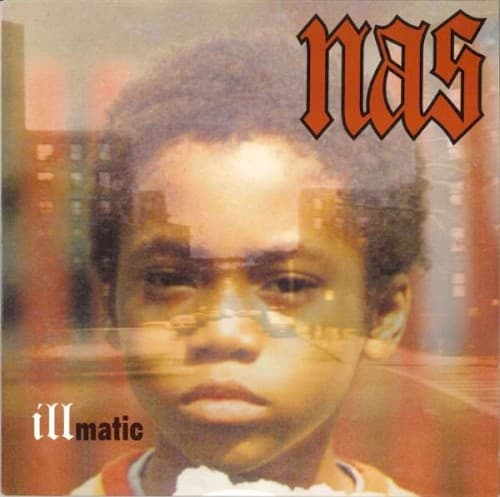
This cover helped establish the 'rapper as mystic' visual trope that would influence album art throughout the 2000s, from Jay-Z's Kingdom Come to Kendrick's religious imagery. The double exposure technique became overused in hip-hop marketing, making this feel derivative now despite its period ambition. While not as influential as Illmatic's childhood snapshot, it demonstrated how rappers could claim historical and spiritual authority through visual reference.
![[untitled] by Nas album cover](/_next/image?url=https%3A%2F%2Fv8ewju5eansilllx.public.blob.vercel-storage.com%2Fcovers%2Fnas-untitled.jpg&w=640&q=75)