The scorecard
8.4/10 · Great
- Writing25%
- 9.0
- Production25%
- 8.5
- Delivery15%
- 8.0
- Cohesion15%
- 8.5
- Originality10%
- 7.5
- Replay value10%
- 8.0
The specificity and honesty of the self-examination on tracks like "Kill Jay Z" and "4:44" puts Jay-Z's pen at a career high, finally saying what he spent two decades avoiding.
No I.D.'s soul-sample work creates the warm, lived-in backdrop the writing needs, though a few tracks like "Moonlight" feel undercooked at under three minutes.
Jay-Z raps with the weariness and precision of someone who knows exactly what he is confessing, though the conversational tone sacrifices some of the technical flash of his prime.
At 36 minutes the album moves from self-critique to apology to legacy with strong sequencing, though the middle sags slightly with tracks that feel thin or like detours.
The vulnerability is new for Jay-Z and rare among rappers at his level, though the sample-heavy soul-rap template itself echoes The Blueprint and countless successors.
The album holds up because the writing is dense enough to notice new details, though once you have absorbed the confessions the emotional urgency does not renew itself.
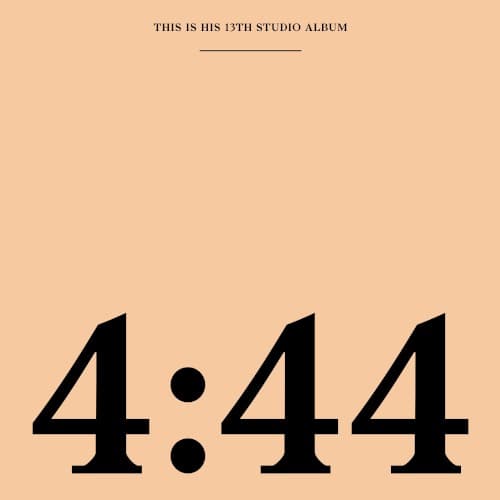
JAY-Z 4:44 — The Apology He Spent 20 Years Not Writing
After two decades of deflection and braggadocio, Jay-Z made an album about the cost of being Jay-Z. 4:44 is a 36-minute accounting of infidelity, ego, and the gap between the brand and the man, delivered with the unflinching specificity he spent his entire career avoiding. The thesis is in the title track, where he catalogs the affair that nearly ended his marriage and admits he sabotaged the one relationship that mattered more than any deal. The rest of the album circles that admission, examining how he got there and what he owes the people he hurt. It is not a reinvention; it is an older man finally willing to say what younger versions of himself would have buried in metaphor.
The stakes are higher than usual for a late-career confessional because Jay-Z built his legacy on control. He was the mogul who never slipped, the strategist who turned every loss into leverage. 4:44 dismantles that image on purpose. He opens the album by telling himself to kill the persona he spent Magna Carta Holy Grail polishing, then spends the next half hour proving he means it.
The album works because it never pretends the honesty is heroic; Jay-Z knows he is cleaning up a mess he made, and the writing reflects that. No triumphant hooks, no victory laps. Just the work of repair, set to soul samples that sound like someone finally sitting still long enough to listen.
The Sound of Sitting With What You Did
No I.D. built the album from soul, funk and reggae samples spanning five decades, playing them like instruments rather than looping them wholesale. The production is warm and analog in a way that recalls The Blueprint, but slower and more patient, as if the beats know the writing needs room to breathe. Tracks like "Smile" and "Legacy" layer Stevie Wonder and Donny Hathaway into backdrops that feel like late-night conversations, not club records. The sample of Hannah Williams and The Affirmations on "4:44" is the clearest example: No I.D. lets the ache in the original vocal carry the weight, then places Jay-Z's apology directly on top of it. The production is not flashy, and that is the point. This is an album about facing what you did, and the beats reflect that reckoning.
Jay-Z and No I.D. worked from a shared playlist and recorded most of the album in No I.D.'s home studio, finishing just before release. The approach paid off in cohesion but left a few tracks feeling thin. "Moonlight" and "Marcy Me" both run under three minutes and end before they develop, as if the writing ran out before the ideas did. "Bam" tries for a lighter, reggae-tinged mood with Damian Marley, but the four-piece horn section and guitar feel like a detour the album does not need. The sequencing is deliberate enough that these weaker moments do not derail the arc, but they are noticeable in an album this short.
Jay-Z raps in a conversational tone that prioritizes clarity over technical flex. He is not trying to prove he can still out-rap anyone; he is trying to make sure you understand what he is saying. The storytelling on "Kill Jay Z" is as direct as he has ever been, naming the Solange elevator incident and his friendship with Kanye West without euphemism. "The Story of O.J." unpacks racism and wealth with the same bluntness, paraphrasing the ways Black success gets policed and repackaged.
The writing is stronger when it is specific. "Caught Their Eyes" references Prince and Tidal exclusivity in ways that feel more like diary entries than songs, and the album is better for it. Guest verses are minimal: Frank Ocean hums in the background, Beyoncé adds harmonies to "Family Feud", and Gloria Carter recites a poem on "Smile" about coming out as a lesbian. None of them distract from the main narrative, which is Jay-Z explaining himself.
How the Album Earns Its Length
At 36 minutes, 4:44 is the leanest album Jay-Z has made since his first retirement, and the pacing reflects someone who knows exactly what he needs to say. The opening track is a self-directed autopsy of the ego that drives the next 32 minutes, then the album broadens the lens to examine how success and Blackness collide in America. The shift from internal to external and back again is the album's rhythm: some tracks are personal, others communal, others cultural critique. The sequencing is tight enough that even the two-minute entries feel intentional rather than incomplete.
The album sags slightly in the middle. One track is the only one that feels like it belongs on a different record, and another ends before it makes its point about Hollywood and representation. But the first stretch through the middle section to the closing run is as focused as anything in Jay-Z's catalog, with no obvious filler and no wasted runtime. The album ends on a track about generational wealth and what he wants to leave his children, which closes the loop opened by the beginning. The length is earned because nothing here feels like padding.
Where It Ranks and Who Should Start Here
4:44 is Jay-Z's best album since The Blueprint and the most honest writing of his career. It ranks ahead of Watch the Throne, which had stronger individual moments but no unifying argument, and behind only The Blueprint and Reasonable Doubt in the full catalog. The difference is that 4:44 required him to dismantle the persona those earlier albums built, and he did it without hedging. This is not an album for casual fans or people who want the mogul version of Jay-Z. It is for listeners who care about what happens when a rapper finally stops managing his image and writes about the person underneath.
The album has aged well because the writing was specific enough to avoid sounding like a trend. The Lemonade references tie it to 2017, but the core subject matter is repair and accountability, which does not date. Start with "Kill Jay Z", "The Story of O.J.", and "4:44" to understand what the album is doing, then decide if you want the rest. Skip it if you prefer the untouchable version of Jay-Z or if you need more than 36 minutes from a project. If you finish this and want more in the same vein, go to The Blueprint for the last time No I.D.-style soul production elevated Jay-Z's writing, or to Nas's Life Is Good for another late-career reckoning with marriage and mistakes. 4:44 is the sound of someone who spent two decades winning finally admitting what it cost him.
Track by track
Track Listing
Kill Jay Z
StandoutThe album opens with Jay-Z instructing himself to kill the egotistical persona he polished on Magna Carta Holy Grail, and the specificity is immediate. He names the Solange elevator incident, his decision to shoot his brother, and his rumored affairs, all in under three minutes. The Alan Parsons Project sample provides a dark, swirling backdrop, and Jay-Z raps with the precision of someone who has rehearsed this confession but is still uncomfortable saying it out loud. The writing is blunt: he is telling himself to let go of the armor he spent decades building, and the track works because it does not ask for sympathy. No I.D.'s production stays minimal, leaving room for the words to land without interference. This is the thesis statement, and it sets the tone for everything that follows.
The Story of O.J.
StandoutJay-Z uses the Nina Simone sample and animated imagery to examine how wealth does not insulate Black Americans from racism, and how success gets repackaged as assimilation. The writing is sharp and direct, paraphrasing the ways systemic inequality persists regardless of income, and the track works because it moves from the personal to the structural without losing focus. The animated video drew criticism for its imagery, but the song itself is one of the clearest articulations of these ideas in mainstream rap. No I.D. loops the Simone sample and Kool and the Gang elements into a hypnotic, old-school beat, and Jay-Z delivers the verses with the confidence of someone who has been thinking about this for years. The track is a standout and has aged into one of the album's most-cited moments.
Smile
StandoutJay-Z raps about his mother coming out as a lesbian, and Gloria Carter closes the track with a spoken-word poem about living authentically. The Stevie Wonder sample is warm and inviting, and No I.D. uses it to create a backdrop that feels like a private conversation. Jay-Z's verse is tender and specific, describing his mother's life and his own gratitude that she found peace. The poem is the emotional center: Gloria Carter speaks plainly about hiding and then choosing to stop, and the simplicity of her words makes the track feel earned. The production is patient, giving both the rap and the poem space to breathe. This is one of the album's most vulnerable moments, and it works because neither Jay-Z nor his mother perform the vulnerability; they just state it.
Caught Their Eyes
SolidFrank Ocean contributes background vocals to a track that references Prince, Tidal exclusivity, and the music industry's treatment of Black artists. The Nina Simone sample of "Baltimore" anchors the production, and Jay-Z raps about the business decisions behind streaming and ownership. The track feels more like a diary entry than a structured song, which is both a strength and a weakness: the specificity is compelling, but the writing meanders and the under-three-and-a-half-minute runtime ends before the ideas fully develop. The inclusion of audio from the Army-McCarthy hearings adds historical weight, but the track is one of the album's less memorable moments. It is solid but not essential.
4:44
StandoutThe title track is a direct apology to Beyoncé, cataloging the infidelity and selfishness that nearly ended their marriage. Jay-Z wrote it after waking at 4:44 a.m. and recorded it at home using Beyoncé's microphone, and that origin story is audible in the intimacy of the performance. The Hannah Williams and The Affirmations sample provides a melancholic, aching backdrop, and No I.D. lets the original vocal carry the emotional weight. Jay-Z's verse is specific and unflinching: he describes the affair, the consequences, and the work of repair in language that avoids euphemism. The track is the album's centerpiece and the reason the rest of the project works. The writing is vulnerable without being performative, and the production stays minimal enough to let the words do the work. This is the most honest songwriting of Jay-Z's career.
Family Feud
SolidBeyoncé appears on the hook, and Jay-Z uses the track to address tensions in the Black community and his own household. The Clark Sisters sample provides a gospel-inflected foundation, and the writing moves between the personal and the political. Jay-Z paraphrases lines from Beyoncé's Lemonade, including the "Becky with the good hair" reference, and uses the family metaphor to talk about internal conflict and the work of reconciliation. The track is solid but not as sharp as the surrounding songs; the writing is less specific than "4:44" or "Kill Jay Z", and the hook feels like it is doing more work than the verses. The production is warm and the sequencing makes sense, but the track does not stand out on its own.
Bam
SolidDamian Marley contributes vocals to a reggae-influenced track with a four-piece horn section and guitar, and the result is the album's only real detour. The Sister Nancy and Jacob Miller samples give the track a lighter, more playful mood, and Jay-Z raps about ego and confidence in a way that contrasts with the vulnerability of the surrounding songs. The track is fine as a one-off, but it feels out of place on an album this focused. The production is competent, but the horns and reggae rhythm do not serve the writing the way No I.D.'s soul samples do elsewhere. Jay-Z described the track as a palate cleanser, and that is accurate; it is not a weak song, but it is the most skippable moment on the album.
Moonlight
WeakJay-Z uses the Fugees sample to critique Hollywood and the limited roles available to Black actors, referencing the Moonlight and La La Land Oscars moment as a metaphor for representation. The track is under two and a half minutes, and it ends before the argument fully develops. The writing is sharp in places, but the brevity makes it feel incomplete, as if Jay-Z had more to say and ran out of time. The production is spare, and the sequencing places it between "Bam" and "Marcy Me", where it works as a transition but not as a standalone moment. The track is the album's weakest, not because the idea is bad but because it is underdeveloped.
Marcy Me
StandoutJay-Z returns to his Marcy Projects origin story, reflecting on how far he has come and what he left behind. The Quarteto 1111 sample and the Notorious B.I.G. interpolation give the track a nostalgic, reflective tone, and the writing is specific about place and memory. The track is under three minutes, which is just enough to make the point without overstaying. No I.D.'s production is minimal, letting the sample and the rap carry the mood. The track works as a late-album reflection, and the brevity feels intentional rather than rushed. It is not a standout, but it serves the album's arc.
Legacy
StandoutThe album closes with a meditation on generational wealth and what Jay-Z wants to leave his children. The Donny Hathaway sample and the Raekwon interpolation create a warm, contemplative backdrop, and the writing is specific about financial literacy and long-term planning. Jay-Z raps about buying property, teaching his children about money, and breaking cycles of poverty in ways that connect the personal to the structural. The track is a fitting closer, circling back to the self-examination of "Kill Jay Z" and offering a way forward. The production is patient, and the writing is clear enough to land without overexplaining. This is one of the album's strongest moments and the reason the 36-minute runtime feels complete.
Frequently Asked Questions
Is Jay-Z 4:44 a good album?
What is Jay-Z 4:44 album about?
Who produced Jay-Z 4:44?
How long is Jay-Z 4:44 album?
Genres
Styles