Fugees: The New Jersey Trio That Made Alternative Hip-Hop a Mainstream Event
Few groups have carried a name with as much weight as Fugees. The word comes from "refugee," a label often thrown at Haitian Americans as an insult, and the trio of Lauryn Hill, Wyclef Jean and Pras Michel took it and turned it into a banner. Their story begins in South Orange, New Jersey, in 1990.
What made them stand out was range. In an era dominated by gangsta rap, Fugees blended hip-hop and R&B with reggae, soul and sounds from across the African diaspora, and they played with live instrumentation rather than leaning only on samples. Hill's voice and rapping, Jean's restless production and Michel's steady presence added up to something that did not sound like anything else on the radio.
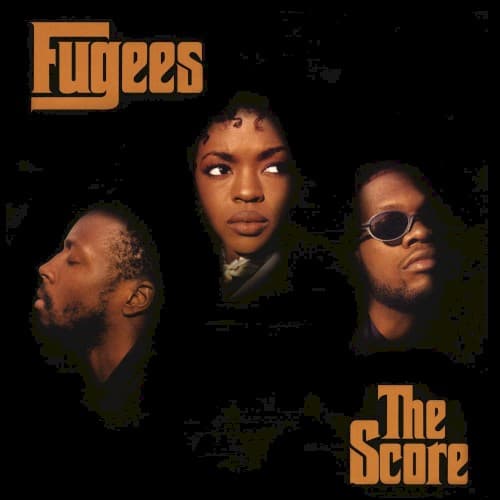
The payoff arrived in February 1996 with The Score, an album that reached number one on the Billboard 200 and was later certified 7x platinum by the RIAA. If you are discovering them now, that is the record to start with, and it is the only Fugees album we have reviewed here. But the group is more than one hit run. The earlier Blunted on Reality is a rougher, searching debut, and the aftermath of the breakup shaped the next decade of hip-hop and R&B through the solo careers it launched.
Reggae Basslines, Soul Singing and Street Poetry: The Fugees Sound
The Fugees did not pick a lane, and that is the lane. A typical track might open on a hip-hop drum pattern, slide into a reggae-inflected groove, then surface in a chorus that sounds closer to classic soul. Hill could rap a verse with real bite and, in the next section, sing it with a warmth that made other singers sound busy.
Covers were central to their identity. On The Score they reworked Bob Marley and the Wailers' "No Woman, No Cry" and gave "Killing Me Softly with His Song" a new life; the latter became their biggest hit. "Ready or Not" reinterpreted the Delfonics' "Ready or Not Here I Come (Can't Hide From Love)" and built its signature sound around a prominent sample of Enya's "Boadicea." The sample was used without permission, which led to a lawsuit and a settlement that credited Enya and gave her royalties. The group has publicly praised her for how she handled it.
Their politics were embedded rather than shouted. The socially conscious lyrics and the Haitian heritage of Jean and Michel gave the music a perspective that the gangsta-dominated rap landscape rarely offered. It was resilience framed as pop craft.
Production remained a communal affair. The Tranzlator Crew days included a live band, and the debut was made under the guidance of Ronald "Khalis" Bell of Kool & the Gang. The group later said they gave their producers too much control on that first album, a lesson that arguably explains how confident The Score sounds.
From Tranzlator Crew to The Score: A Short, Intense Career Arc
Hill and Pras met at Columbia High School in Maplewood, New Jersey, formed a trio with a friend, and Wyclef Jean joined the lineup in 1990. They played as Tranzlator Crew with a live band, signed to Ruffhouse, a Columbia imprint, in 1993, and then adopted the Fugees name.
Blunted on Reality, written and recorded in 1992, was held up by a dispute with the label and finally came out on February 1, 1994. It produced the singles "Boof Baf," "Vocab" and "Nappy Heads." The remix of "Nappy Heads" by Salaam Remi reached number 49 on the Billboard Hot 100. Critics praised the album's artistry and its inventive use of samples, but it struggled to find a mainstream audience.
Then came The Score. Released in February 1996, it spawned "Fu-Gee-La," "Killing Me Softly" and "Ready or Not." It topped the Billboard 200, became the second rap album nominated for the Grammy for Album of the Year, and won two Grammys at the 1997 ceremony: Best Rap Album and, for "Killing Me Softly," Best R&B Vocal Performance by a Duo or Group. For a while it was the best-selling hip-hop album of all time.
The group also recorded "Rumble in the Jungle" with Busta Rhymes, A Tribe Called Quest and John Forté for the documentary When We Were Kings; it reached the UK top five, as did their collaboration with Simply Red on "Angel." They formed the Refugee Camp All-Stars collective and staged what is described as the largest concert in Haitian history. Remixes of Michael Jackson's "Blood on the Dance Floor" and "2 Bad" followed.
Then it ended, quickly. Late in 1997 each member started on solo projects: Hill wrote and produced for other artists and began work on The Miseducation of Lauryn Hill; Jean released Wyclef Jean Presents The Carnival, which featured extensive contributions from all three; Michel recorded "Ghetto Supastar (That Is What You Are)" with Mya and Ol' Dirty Bastard.
The years after have been uneven. A 2004 reunion at Dave Chappelle's Block Party was a highlight, with reviewers praising Hill's near a cappella "Killing Me Softly." A 2005 European tour got mixed reviews, "Take It Easy" appeared as a single, and the promised album never materialized as the group reportedly struggled with creative differences. A reunion tour tied to The Score's 25th anniversary was announced in 2021 and postponed, then rescheduled for 2024, though only the UK leg went ahead. In 2026 Hill and Jean reunited to perform a tribute at the Grammy Awards, and later that year joined JAY-Z on stage in London.
Why Fugees Still Matter: Alternative Hip-Hop's Mainstream Breakthrough
Billboard has said the group's influence on modern hip-hop and R&B is undeniable, and the numbers back the point: more than twenty-two million records sold worldwide, a place on Rolling Stone's list of the 500 greatest albums (The Score, number 134) and songs ("Killing Me Softly"), and a spot for "Ready or Not" on the Rock and Roll Hall of Fame's Songs That Shaped Rock and Roll. Bono once called them hip-hop's version of the Beatles, and Barack Obama has named "Ready or Not" his favorite song ever.
Their influence on other artists is wide. Drake, Kanye West, Young Thug, Doja Cat, Post Malone and DJ Khaled are among those who have cited them. The most direct line runs through Lauryn Hill, whose solo debut and later career carried the group's template of singing and rapping in one voice. The idea that a rapper might sing a chorus without losing credibility owes a lot to this trio.
Culturally, they reshaped how Haitian identity was heard in American pop. They helped put Haiti on the hip-hop map and recast a word used as an insult as a source of pride. After the breakup, Jean co-founded the Yele Haiti Foundation, and the group turned its studio, the Booga Basement, into a transitional house for young Haitian refugees.
Their weakness is the thinness of the output. Two albums, a few collaborations and years of reunion talk leave a smaller body of work than their reputation suggests. But the best of it, especially The Score, has aged better than almost anything from its decade.